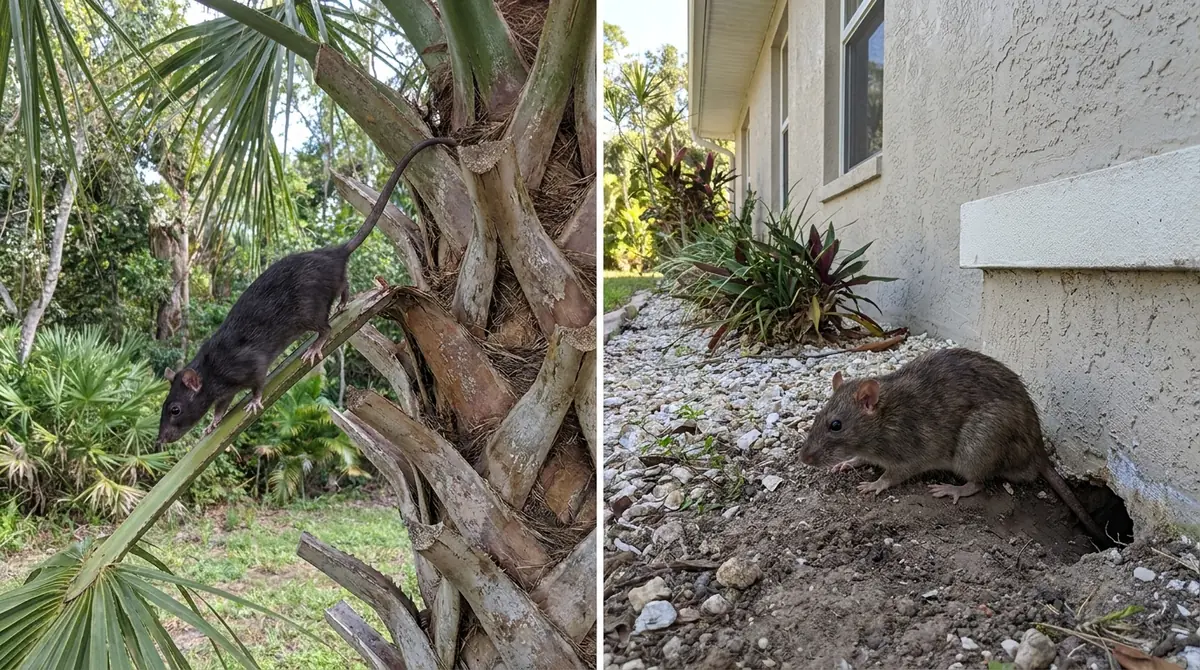
If you live in St. Augustine, you have probably heard the term palm rat. It sounds like a separate pest, but it is not. A palm rat is a roof rat, Rattus rattus, with a Florida nickname, earned because it nests in palm trees. Once you know that, the problem becomes clearer: the palm in your yard is a nest site, a food stop and a highway to your roof, all in one.
Roof rats are the most common rat in Florida by a wide margin, and St. Augustine gives them everything they need: sabal and queen palms, live oaks, citrus trees, tile roofs and warm weather all year. This guide explains what a palm rat is, why palms attract roof rats, and how they get from the palm into your home.
What Is a Palm Rat?
A palm rat is a roof rat that nests in palm fronds. The name is a Florida nickname, not a separate species. The same animal is also called a black rat, a fruit rat and a citrus rat, and its scientific name is Rattus rattus. It is a slender climber, 5 to 10 oz, with a body 6 to 8 inches long, a tail longer than its head and body, a pointed nose and large ears.
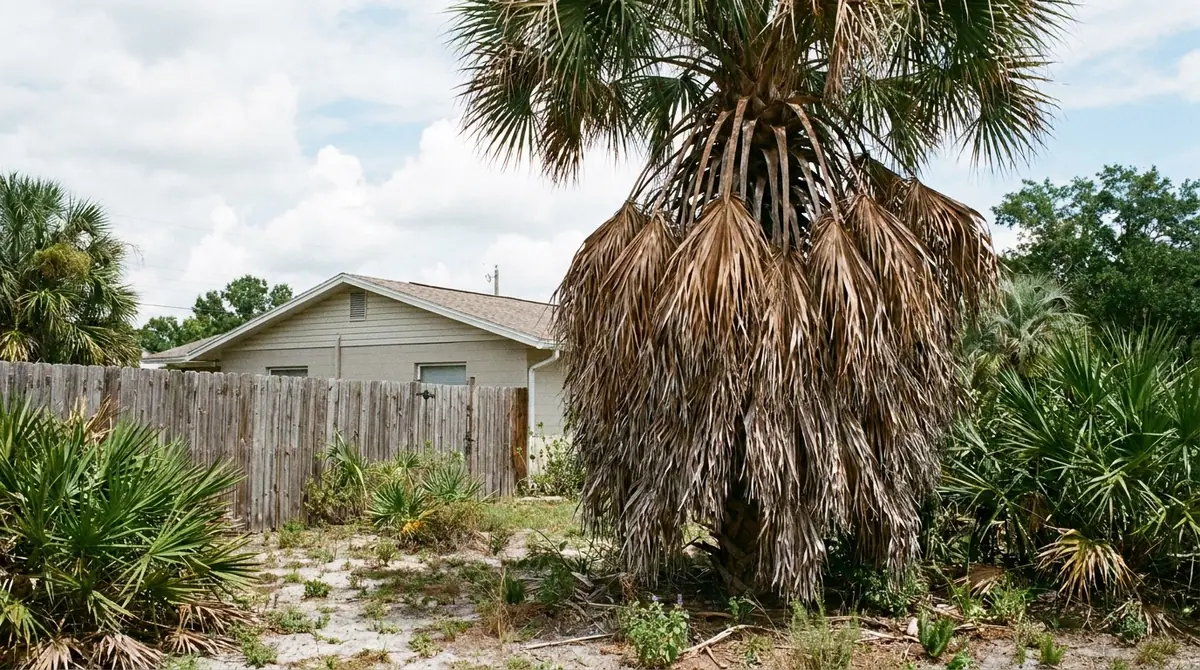
The nickname stuck because the nest site is so visible. The skirt of dead fronds hanging under an untrimmed palm is close to ideal roof rat habitat: sheltered, warm, dry and hidden from view. A single palm can hold a nest, and a yard with several untrimmed palms can hold several. From the palm, the rat has a short trip to the roofline, to the citrus tree, and to the attic vent. Palm rats are active all year, and the worst period is late fall through winter, from October to February, when cooler weather drives them indoors.
Why Palms Attract Roof Rats
Palms attract roof rats for three reasons: shelter, food and height. The dead frond skirt is the shelter. On an untrimmed palm, the dead fronds hang down in a thick skirt around the trunk, and the space inside that skirt is dry, warm and hidden. Roof rats nest in that space, and they shred the fronds into the nest. Sabal palms, also called cabbage palms, and queen palms are the two types our technicians see most often with nests, and a sabal frond skirt can grow very thick when the palm has not been trimmed for a season or two.
Food is the second reason. Palms stand in yards with citrus trees, mango trees and avocado trees, and roof rats eat fruit, vegetables and grain. A palm beside a citrus tree gives the rat a nest and a meal close together, and queen palm fruit adds a food source close to the nest. Height is the third reason: a palm gives the rat a high, safe route, off the ground and away from predators, straight toward the roofline. A roof rat female produces 4 to 5 litters a year, with 5 to 8 pups in each litter, so a nest found in autumn can grow quickly.
How Palm Rats Get Into Your Home
Roof rats are climbers, and they rarely come in at ground level. From the palm, they cross along branches, fences and utility lines to the roofline, then slip in through the gaps every Florida roof has. Gaps under barrel and S-tile, seams where tile meets fascia, soffit and fascia joints, and ridge, gable and attic vents are all possible entry points.
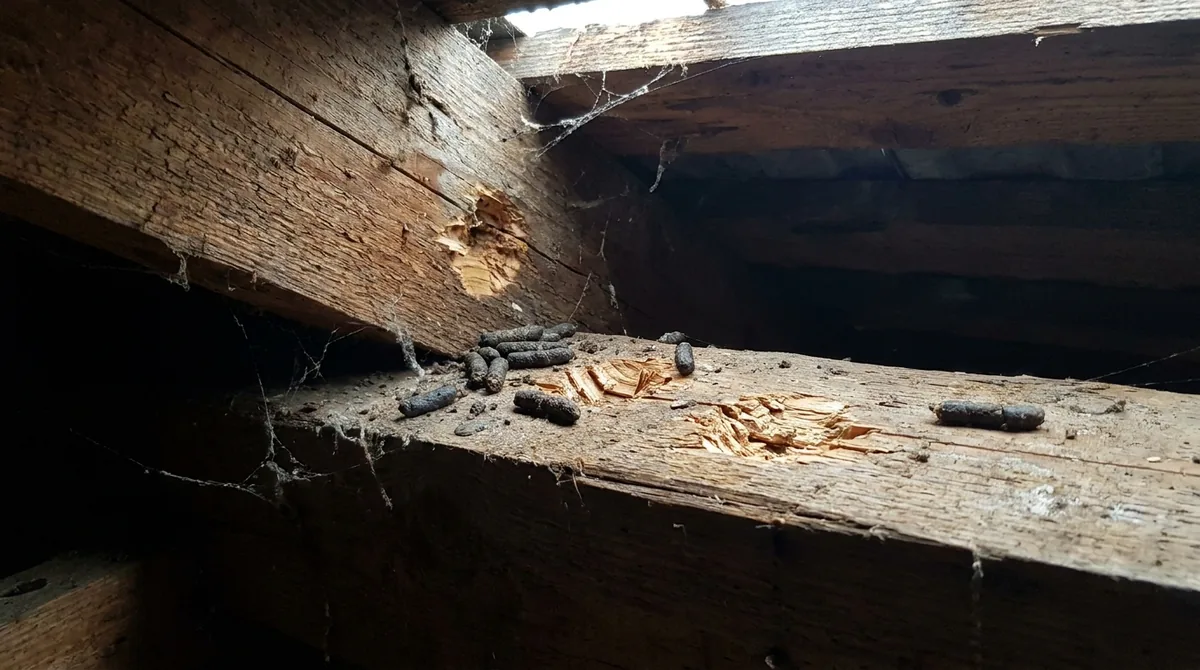
Overhanging oak branches are another route, and in St. Augustine they are common, especially in neighbourhoods with large oak trees near the Bayfront and the Historic District. An overhanging oak branch is a rodent highway straight to your attic, and a palm frond touching the roof works the same way. Once the rat is on the roof, it only needs a gap 1/2 inch wide, about the size of a quarter, to get inside. Inside, it heads for the attic, the soffits or the upper wall voids, and it leaves spindle-shaped droppings with pointed ends, about 1/2 inch long, along the beams.
How to Cut the Risk
Start with the palms. Have the dead fronds trimmed, and remove the skirt, so there is no nest site left on the trunk. Keep the palms trimmed on a regular schedule, and do not let a thick skirt build up again. Then look at the branches: keep all tree branches at least 6 feet from the roof, so there is no bridge from the tree to the tile. A branch that touches the roof is a route, even if the palm itself is trimmed.

Next, deal with food. Pick citrus and other fruit promptly, and clear fallen fruit from the ground, because a hollowed-out orange with a quarter-sized circular hole is a roof rat sign, and a full tree draws rats in from across the yard. Keep garbage in sealed bins and pet food indoors at night.
Then seal the house. Walk the roofline, soffits, vents and eaves, and look for gaps 1/2 inch and wider, especially where wires and pipes pass through the wall. Seal those gaps with hardware cloth or steel mesh, because rats chew through caulk and foam. Check foundation vents and crawl space vents too, and keep shrubs trimmed back from the walls, so rats have no cover at ground level. These steps work best together: trimming removes the nest, cutting the branches removes the route, picking the fruit removes the food, and sealing the gaps removes the entry.
What to Do if You Already Hear Them
If you already hear scratching overhead at night, the rats are in, and trimming the palms will not get them out. Do not seal the attic shut first, or rats can die inside the walls. Trapping comes first, sealing comes second, and cleanup comes third. Call us, and our team will inspect the attic and roofline, trap and remove the rats, seal the entry points, and clean up the droppings and damaged insulation.
After a storm, check sooner rather than later. Hurricanes and tropical storms cause rodent surges in Florida: flooding displaces rats from burrows and low ground into homes, and storm damage creates new entry points in the roofline and soffits. The surge typically peaks within 2 to 3 weeks of a storm and can persist for 4 to 6 weeks, and low-lying coastal neighbourhoods are especially exposed. If a storm has damaged your roofline, have the attic checked, even if you hear nothing yet.
Read our rat control page, and our guide to roof rat vs Norway rat, if you are not sure which rat you have. When you call, tell us about your palms, your citrus trees and your roofline, and our team will give you a plain-language plan before any work starts.