
Every Gap Found, Not Guessed
We walk the roofline, attic, crawl space and foundation, and photograph every gap, so the plan is built on what we saw, not on a guess.

Traps catch rodents. Closing gaps stops them. Our inspection walks the attic, crawl space, garage and roofline, photographs every entry point, and ends with a plain plan and steel-mesh sealing that rats and mice cannot chew through.
Exclusion, also called rodent-proofing, is the sealing work, and it is a different job from trapping. Trapping removes the animals that are already inside. Exclusion closes the gaps they came through, so new animals cannot follow. A job that traps without sealing is a job that repeats, because rats and mice follow the same scent trails through the same holes, year after year.
Our inspection starts outside, at the roofline, and works down: barrel tile and soffits, the construction gap at the roofline, ridge and gable vents, AC lines and pipe penetrations, then the garage, the crawl space and the foundation. Every gap is photographed and marked on a plain plan, so you can see what we found before any work starts. See rat control for what happens when roof rats are already inside, and rodent trapping and removal for the trapping step that goes with sealing.
St. Augustine homes need a closer look than most. Old frame homes in Lincolnville and Historic Downtown have pier-and-beam crawl spaces, old wood and gaps around windows and doors. Barrel tile roofs have sheltered gaps where tile meets fascia. Palms and live oaks give roof rats a route to the roofline. The inspection is built for those details, not for a generic checklist.
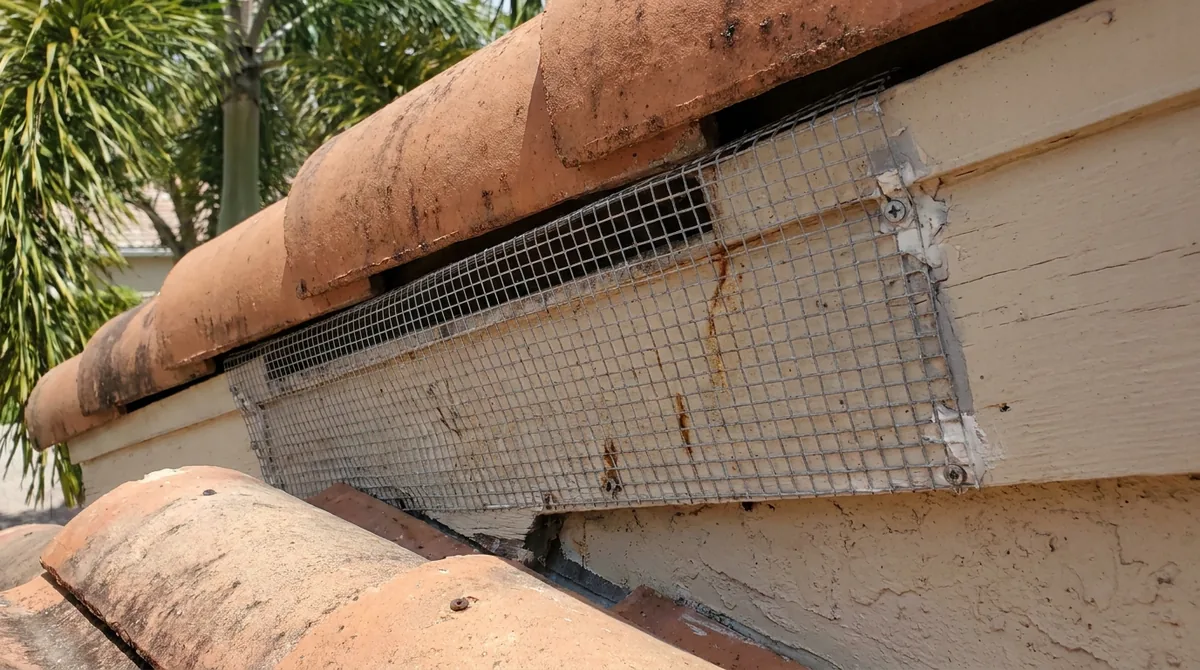
Rats and mice leave marks wherever they travel. Our technicians read those marks, gap by gap, and this is what they look for.
| What we see | What it means |
|---|---|
| Droppings | Fresh droppings near a gap mean it is in use right now; old, dusty droppings mean it was used before |
| Greasy rub marks | Dark smudge lines along a beam, pipe or wall top mark a regular travel route |
| Gnaw marks | Fresh, pale gnawing on wood, plastic or mesh means the gap is being worked on now |
| Hair and tracks | Fine hairs caught on a rough edge, and footprints in dusty insulation, show the route |
| Nesting material | Shredded paper, palm fibre or insulation near a gap means a nest is close by |
| Daylight and draughts | Light showing through a roofline gap, or air moving through it, marks a hole a rat can use |
A rat squeezes through a gap half an inch wide, about the size of a quarter, and a mouse through a gap a quarter of an inch wide, about the size of a dime. That is the rule the inspection is built on: any gap half an inch and wider is a rat gap, and any gap a quarter of an inch and wider is a mouse gap. Both are sealed.
Any one of these signs means a gap is open. Call and describe what you have seen, and we will tell you straight away whether it sounds like an exclusion job, and what to do next.
A rat needs a gap only half an inch wide, and a mouse needs only a quarter of an inch. St. Augustine homes, many of them old, give both animals more chances than a new build does. These are the gaps our inspection finds most often:
Historic facades need a different touch. In Historic Downtown and Lincolnville, exterior changes must respect HARB rules, so we seal with discreet metal mesh that fits the facade, and we tell you what needs a HARB-sensitive approach before we start. Sealing is done from the outside where possible, so the work stays out of your living space.
The attic, crawl space, garage and roofline are walked, inside and out. Every gap is photographed, and droppings, rub marks and gnawing are noted.
You get a plain-language plan with photos: every gap, what it needs, and the order of work. Nothing starts until you have seen it and agreed it.
Gaps are sealed with hardware cloth, steel mesh, sheet metal or mortar, matched to the gap. Foam and caulk alone are never used, because rats and mice chew through them.
Traps are checked and the seals looked at again to confirm the fix is holding and no new activity has started.
Day ranges are typical for a single home; a larger home or a settled infestation can take longer, and the inspection will tell you. Trapping runs alongside sealing, so animals already inside are removed while the gaps close behind them.
The material matters as much as the gap. Rats and mice chew through soft materials in a single night, so the seal has to be harder than their teeth. This is what we use, and what we do not:
Exclusion is the step that decides whether the problem comes back. It takes a slow inspection, the right materials, and sealing that holds. That is what our rodent-only team does.
We walk the roofline, attic, crawl space and foundation, and photograph every gap, so the plan is built on what we saw, not on a guess.
You get photos of every gap and a plain plan of what each one needs, before any work starts. No vague promises, no jargon.
Hardware cloth, steel mesh, sheet metal and mortar. Never foam, caulk or plastic mesh alone, so a rat cannot chew its way back in.
In Historic Downtown and Lincolnville, we seal with discreet metal mesh that fits the facade, and we flag anything that needs a HARB-sensitive approach before we start.
We work only in St. Augustine. We know the tile roofline gaps, the pier-and-beam crawl spaces, and the palm and oak routes to the roof.
We come back on Day 14 to check the seals and look for new activity. If the seals hold and the animals are gone, the job is done.
Sealing fixes the gaps you have now. These four habits keep new ones from opening after we leave.
What open gaps look like on day one, and what is different when the job is done, in three places gaps open most often.
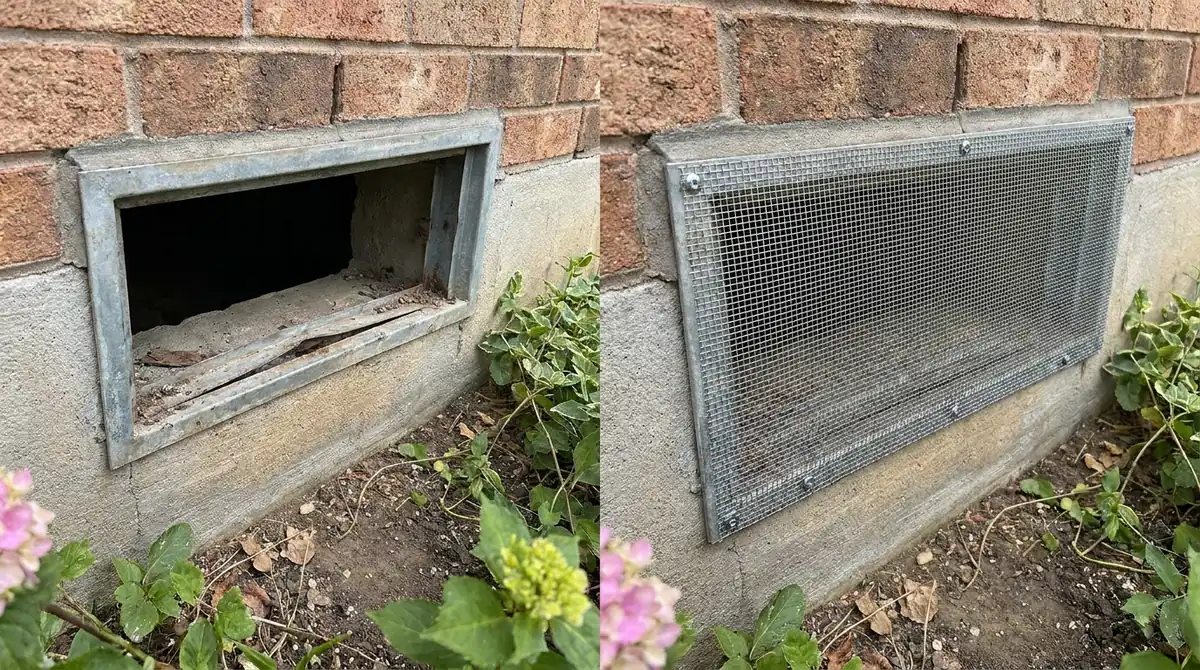 Before
After
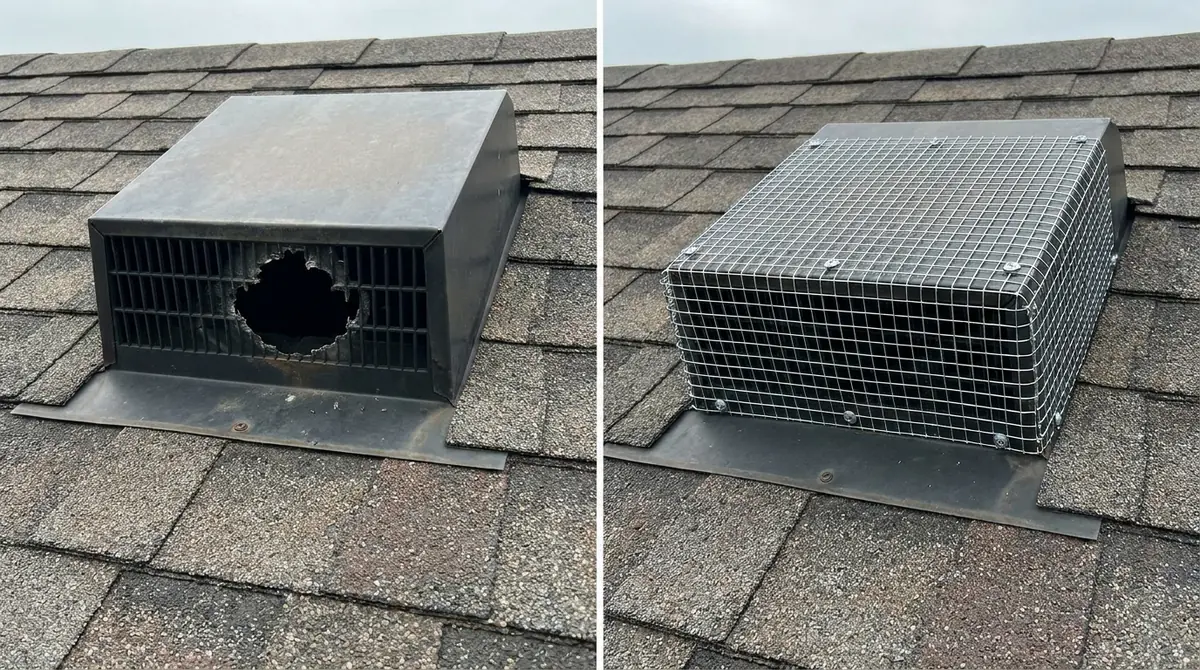 Before
After
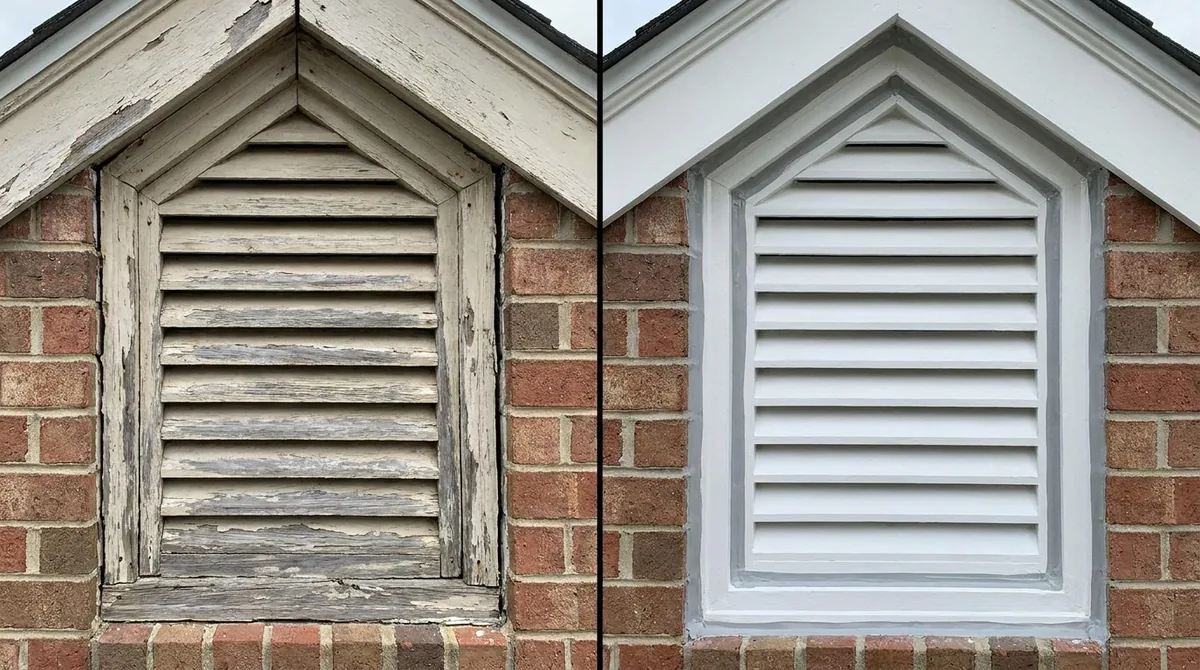 Before
After
These pairs show the kind of change exclusion work makes. They are illustrative images, not photos of one single job: every home's gaps look different. Sealing runs alongside trapping, so animals already inside are removed while the gaps close behind them.
Most exclusion jobs can wait a day. These three cannot. If any of these is happening in your home, call now and tell us.
A rat seen in a kitchen, bedroom or living room means the animals are no longer staying in the attic or crawl space. Keep children and pets out of the room and call us.
Rats chew wiring, and chewed wiring can short out circuits. If you find gnawed cables or a circuit that keeps tripping, call us and do not touch the damaged wiring yourself.
Droppings in a pantry, on a kitchen counter or near stored food mean the rats are reaching your food. Do not sweep dry droppings; call us and we will handle the cleanup safely.
If a rat is in a living space right now, see emergency rodent control for what to do before we arrive. If you smell a dead animal in a wall, attic or crawl space, see dead rodent removal.
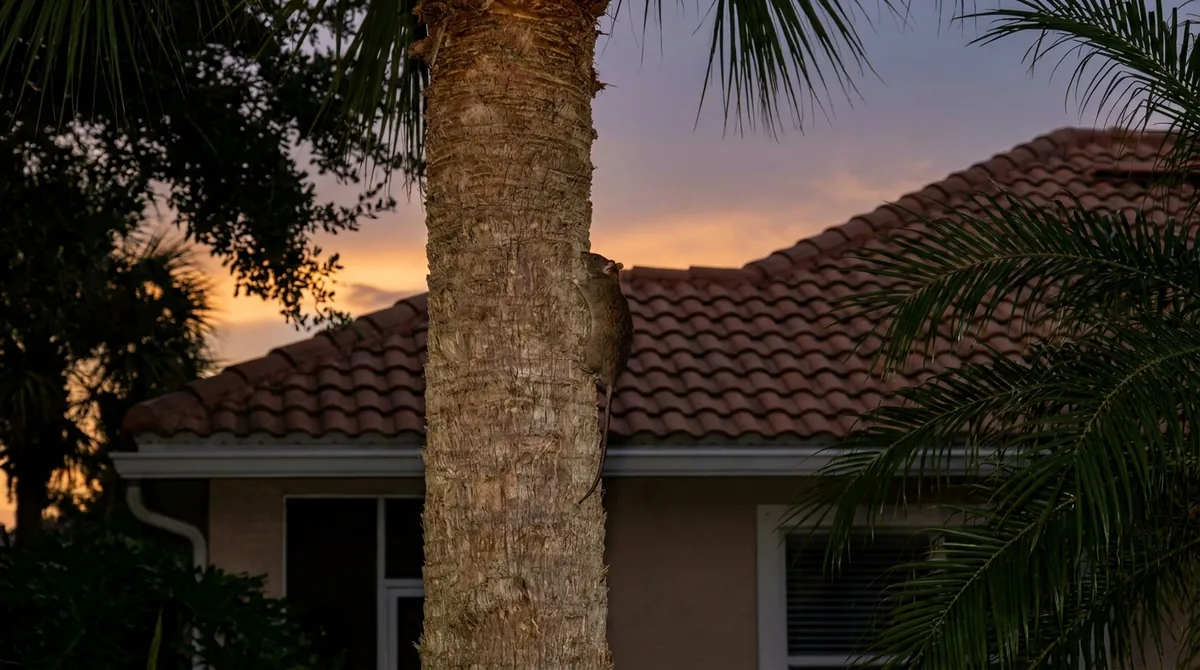
Roof rats and Norway rats trapped and sealed out. We find where they enter, tile roofs, palm fronds and gaps at the eaves, remove the animals, then seal every opening with steel mesh so they cannot come back.
View Details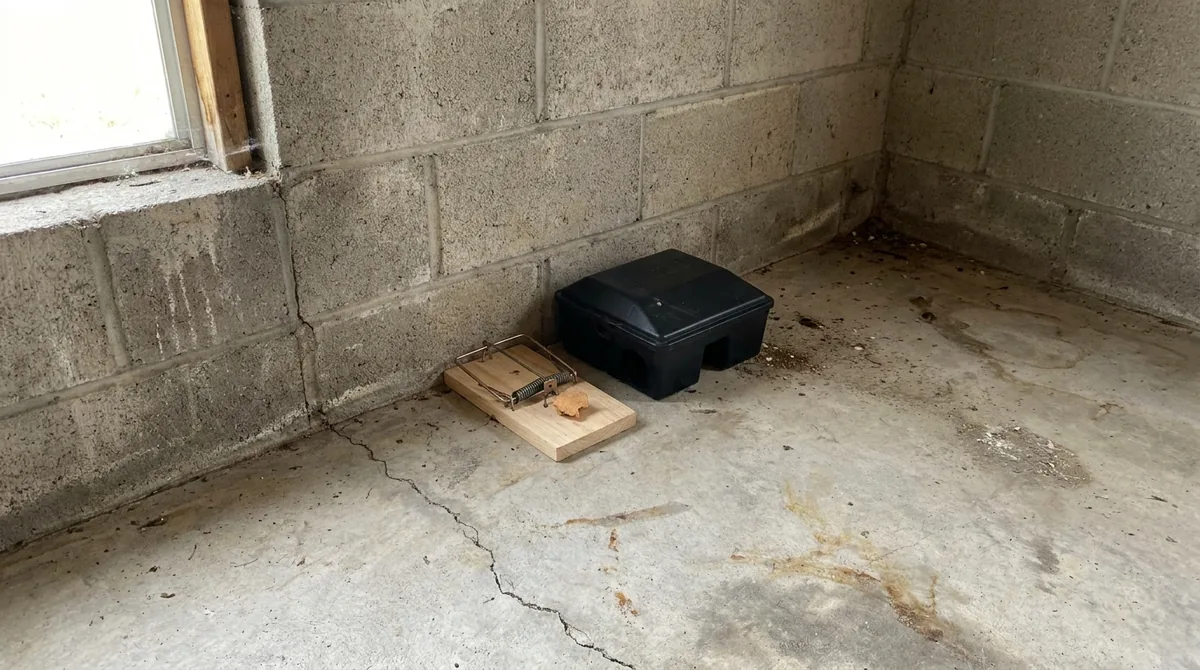
Snap and live traps, plus bait stations outside. We place traps where the animals actually travel, check them on a set schedule, and remove every animal safely and discreetly.
View Details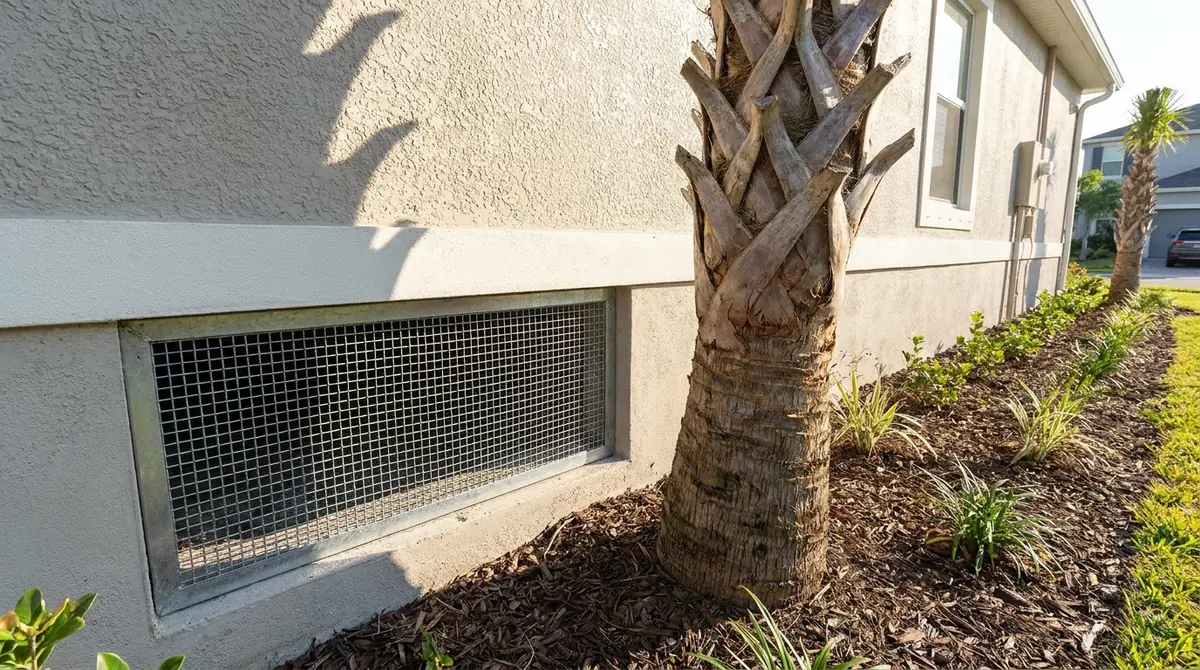
Seasonal checks that catch new gaps early. We visit through the year, re-check every seal, trim back the branches and palms that give rats a route, and stop a small gap becoming an infestation.
View DetailsPractical guides from our St. Augustine team: how to spot roof rats, tell them apart, and keep them out for good.
November 2026
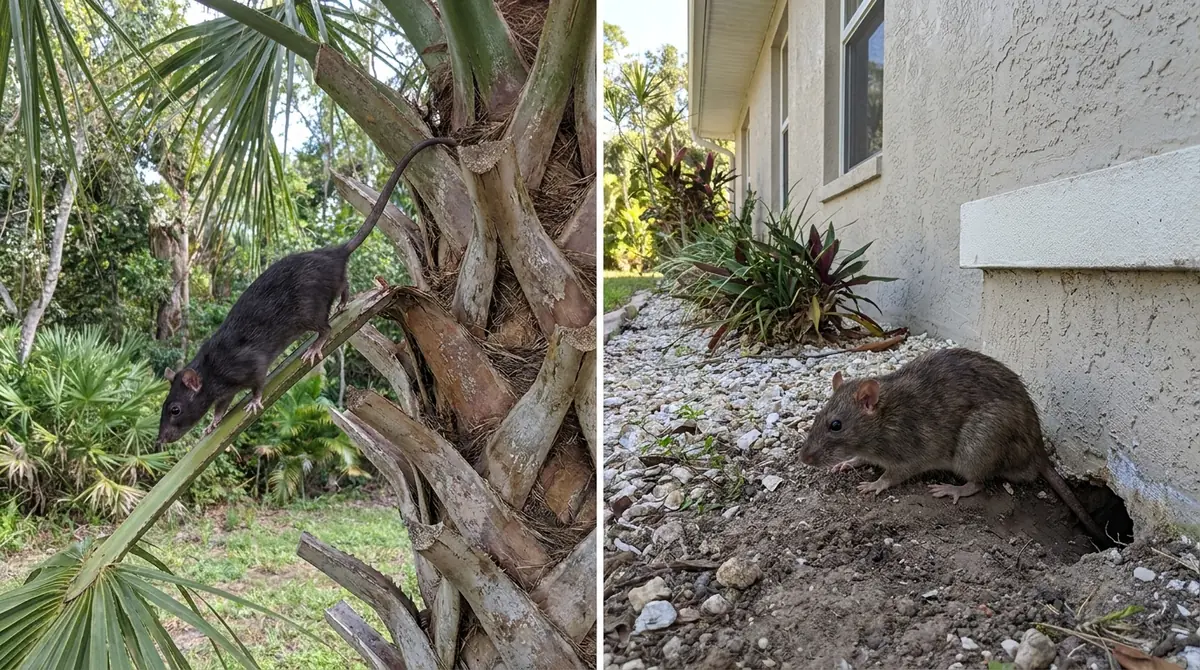
Slender climber or stocky burrower? Size, droppings, sounds and nesting spots give them away.
Read the Guide →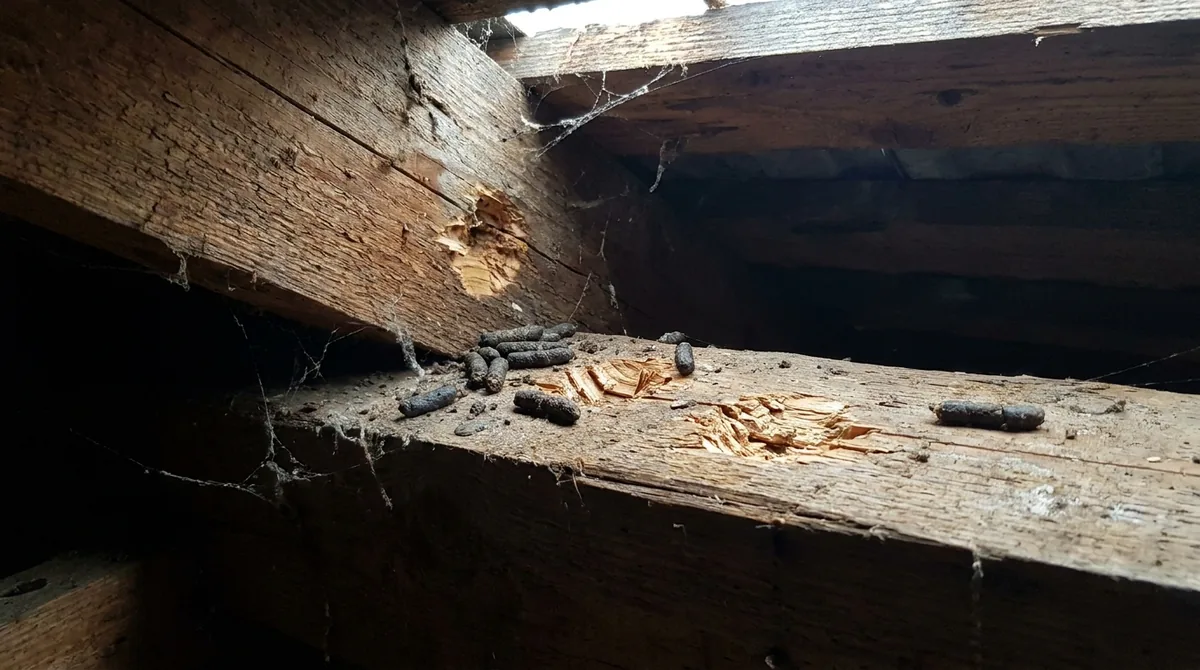
November 2026
Hollowed citrus, palm frond skirts, attic scratching and greasy rub marks: the signs that usually mean a nest.
Read the Guide →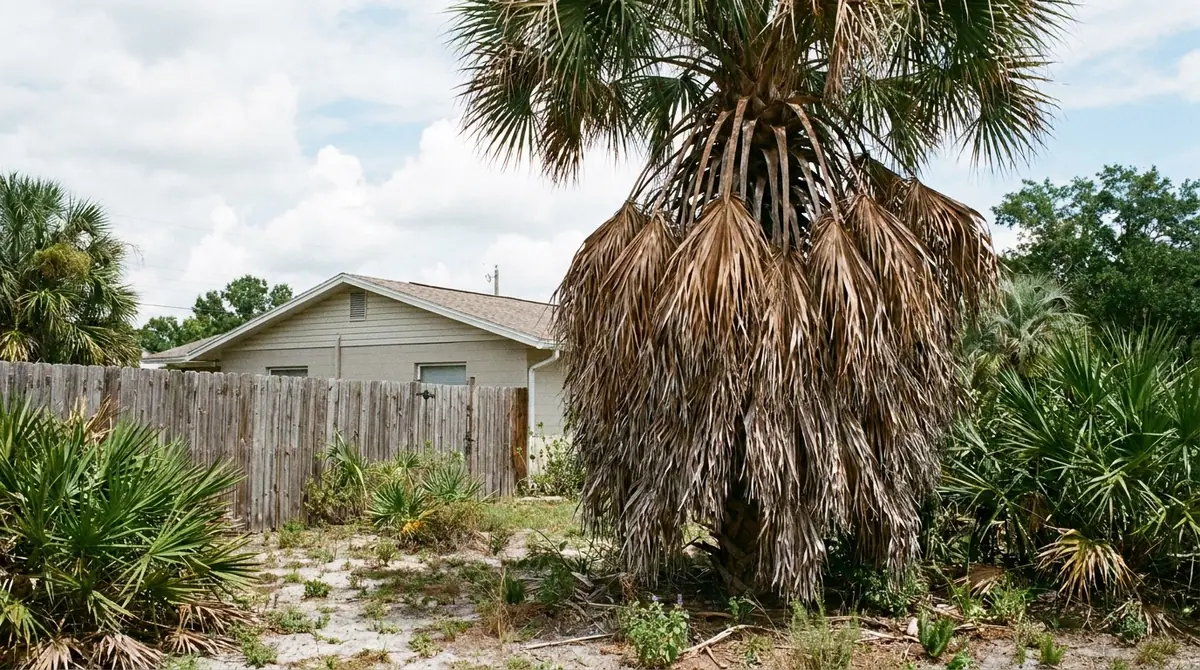
November 2026
A palm rat is a roof rat that nests in palm fronds. Why palms attract them, and how to cut the risk.
Read the Guide →Half an inch, about the size of a quarter. A mouse fits through a quarter of an inch, about the size of a dime. That is the rule our inspection is built on: any gap half an inch and wider is a rat gap, and any gap a quarter of an inch and wider is a mouse gap. Both are sealed with steel, never with foam or caulk alone.
Hardware cloth, steel mesh, sheet metal and mortar, matched to the gap. Steel wool and metal mesh pack into small gaps around pipes and wires. Foam and caulk are used only as a backing behind steel, never as the seal itself, because rats and mice chew through them. Plastic mesh is never used.
Yes, with care. In Historic Downtown and Lincolnville, exterior changes must respect HARB rules, so we seal with discreet metal mesh that fits the facade, and we tell you what needs a HARB-sensitive approach before we start. Sealing is done from the outside where possible, so the work stays out of your living space.
Yes. Trapping runs alongside sealing, so animals already inside are removed while the gaps close behind them. Sealing without trapping leaves animals inside, and trapping without sealing lets new animals in. The two steps belong in the same job.
Call us and we will arrange a fast inspection. Tell us what you have seen or heard and where, and we will come to your St. Augustine home, walk the attic, crawl space and roofline, and give you a plain-language plan with photos before any work starts. If you have a photo of what you found, send it to us and we will tell you what it is.
They can, which is why we come back on Day 14 to check the seals, and why we ask you to check vents and screens every fall and to walk the roofline after a storm. A torn screen found in September is a rat kept out in December, and a seasonal check catches new gaps early.
We provide rodent inspection & exclusion across St. Augustine, including Historic Downtown, Lincolnville, Uptown, North City, Davis Shores, Anastasia Island, West St. Augustine and Fullerwood. See all rodent control service areas in St. Augustine.
“They spent an hour checking the whole house, roof to crawl space, and showed us every gap on a written list. We knew exactly what needed sealing before any work started.”
Rachel H.Historic Downtown
“The inspection found gaps we never would have seen, around the pipes and under the eaves. They sealed them all with steel mesh. Nothing has got in since.”
Tom G.Anastasia Island
“We bought an older home and wanted it checked before winter. The inspection was thorough, the plan was clear, and the sealing held through the cold months.”
Megan P.Lincolnville
Call us and tell us where you are in St. Augustine. Our office is on Allgood Circle in St. Augustine, and our technicians serve homes across the city, from Lincolnville to Davis Shores and from Uptown to West St. Augustine.
Our office: 190 Allgood Cir #109, St. Augustine, FL 32086 · Get Directions
Tell us what you have seen or heard, and our team will come to your St. Augustine home.
(904) 533-7109