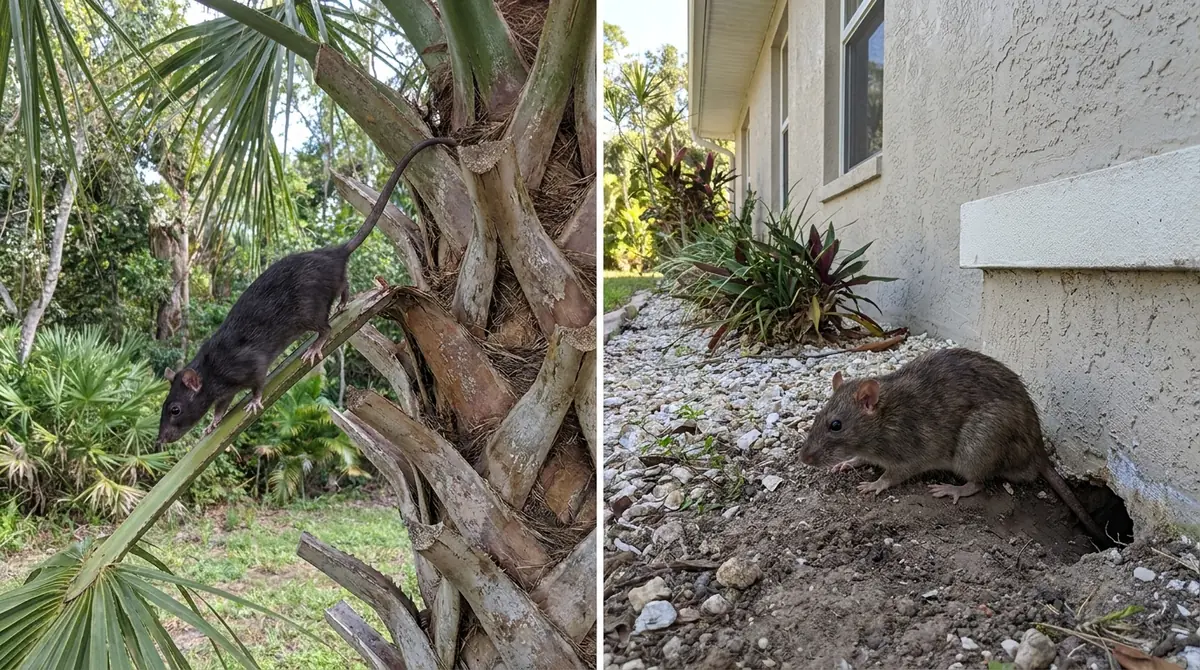
Roof rats rarely show themselves. In St. Augustine they usually arrive quietly, from the live oaks and palms around the house, and settle in the warmest, driest part of the home: the attic, the wall voids, or the soffits. By the time most homeowners see a rat, there has already been a nest for weeks. The good news is that roof rats leave evidence, and some of the signs are distinctive to Florida homes.
Roof rats are the most common rat in Florida by a wide margin, and they stay active all year in our warm climate. The worst period is late fall through winter, from October to February, when cooler weather drives them indoors, and homeowners first notice them from October to January, as citrus ripens. Here are the signs our technicians look for first on every rodent inspection in St. Augustine.
Hollowed Citrus With a Quarter-Sized Hole
This is the signature roof rat sign in a Florida yard. A roof rat chews a neat, quarter-sized circular hole in an orange or other citrus fruit, eats out the inside, and leaves the hollowed shell still hanging on the tree. Roof rats eat fruit, vegetables and grain, and mango, avocado, citrus and lychee trees all draw them in. Check the fruit from October to January, pick ripe fruit promptly, and clear fallen fruit from the ground.
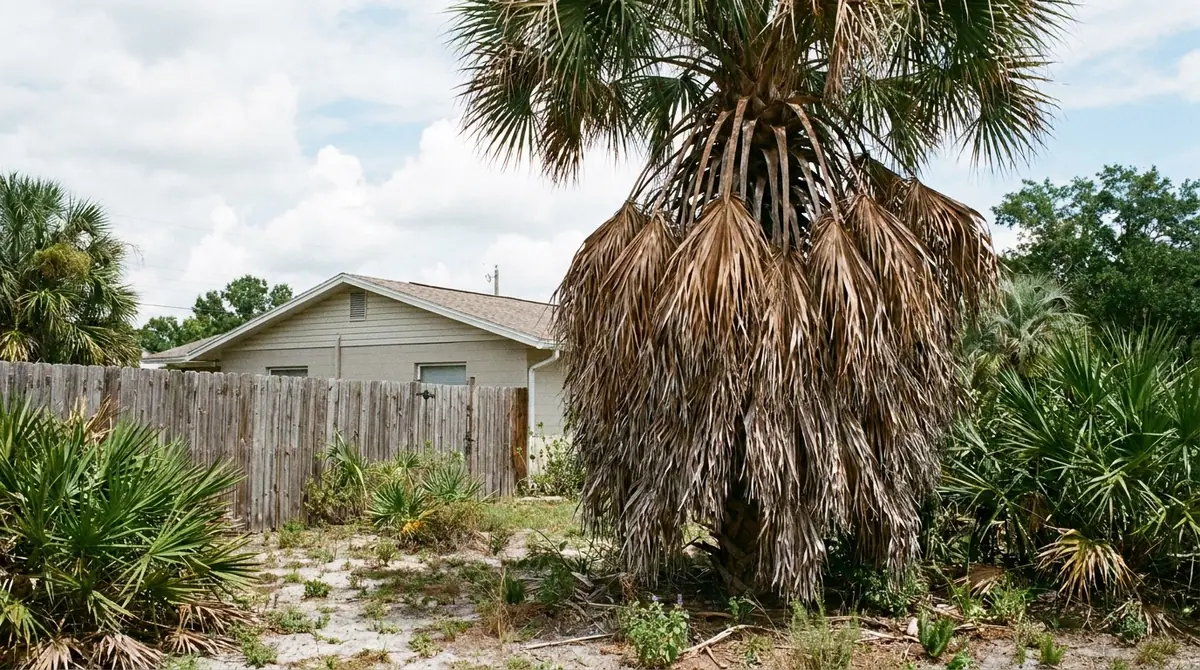
Palm Frond Skirts and Nesting Material
Look up at your palms. The skirt of dead fronds hanging under an untrimmed palm is close to ideal roof rat habitat, giving shelter, warmth and a hidden nest site high off the ground. Sabal palms, also called cabbage palms, and queen palms are the two types our technicians see most often with nests in the frond skirt, which is why the roof rat is nicknamed the palm rat in Florida. Inside, the matching sign is shredded nesting material: roof rats shred insulation, cardboard, fabric and paper to build nests, and in the attic you may find insulation pulled into piles or a nest in a quiet corner. Nesting material near droppings is a strong sign the animals are living there, not just passing through.
Scratching in the Attic at Night
Roof rats are most active after dark, so scratching, scurrying or thumping in the attic or inside an upper wall between dusk and dawn is the most common reason St. Augustine homeowners call us. The sounds are overhead, not at ground level, and you can sometimes hear the animals dragging nesting material. If you hear it, note when it happens and which room it comes from, because the first rule is to never seal the attic shut before the animals are out.
Greasy Rub Marks Along Walls and Beams
Roof rats follow the same routes night after night, hugging walls and beams as they travel from the nest to food and back. Over time their fur leaves faint dark grease marks, called rub marks, along skirting boards, pipes, attic beams and roofline timbers. If you see a dark smear at the same height along a wall or beam, follow it: it usually points to an entry point or a nest, and rub marks in the attic, near a soffit or a vent, are a strong sign the entry point is at the roofline.
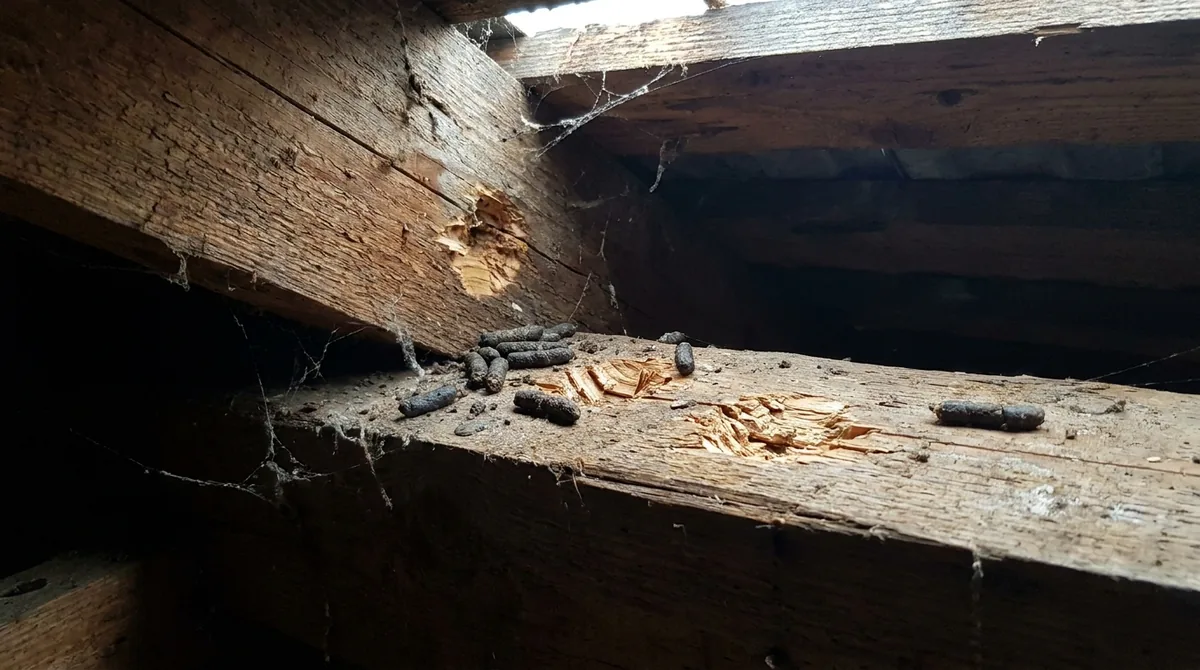
Droppings: Spindle-Shaped With Pointed Ends
Roof rat droppings are dark, spindle-shaped with pointed ends, and about 1/2 inch long. You will usually find them along attic beams, in the soffits, and in upper wall voids. A few droppings in one spot can be a passing visitor, while droppings in several places, or fresh ones appearing night after night, usually mean a nest. Their shape sets roof rats apart from Norway rats, whose droppings are blunt and capsule-shaped, about 3/4 inch long, and found at ground level. Do not sweep or vacuum droppings dry. Leave them alone, note where you found them, and let our team handle the cleanup as part of the job.
Gnaw Marks on Wood, Wiring and Pipes
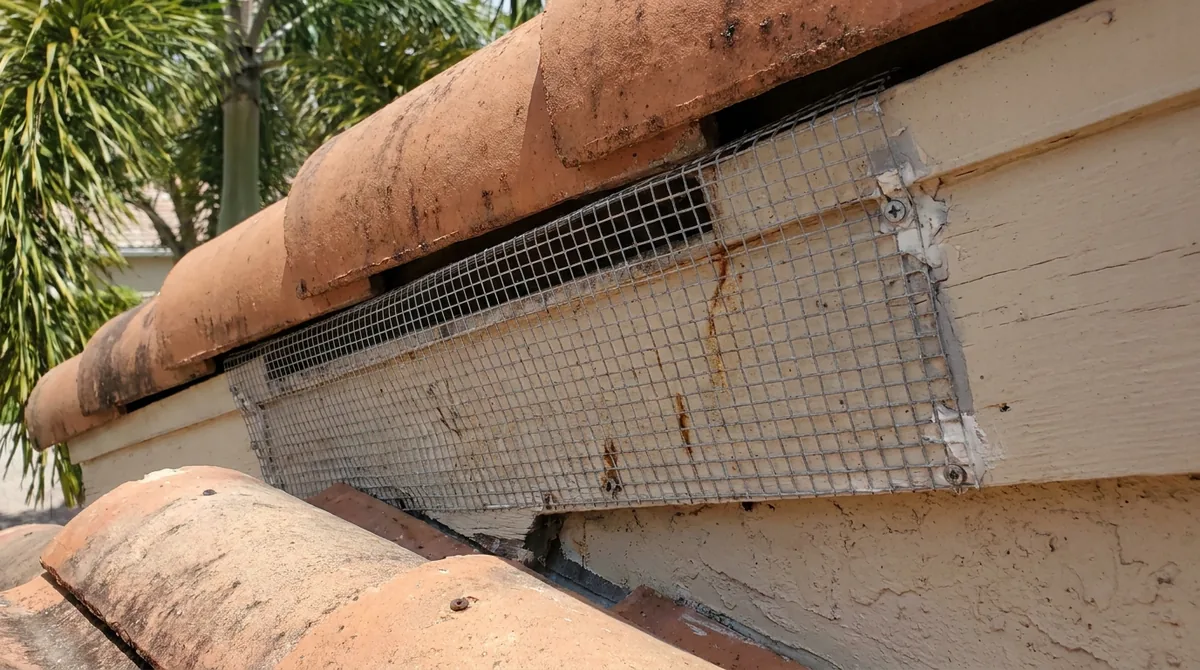
A rat's teeth never stop growing, so it gnaws constantly. Look for fresh chew marks on wooden beams, rafters, door frames, plastic pipes and electrical wiring, and for small holes chewed through drywall, soffits and vent screens. Chewed wiring is more than damage. It is a fire risk, and it is one of the reasons a rat problem should not wait. Gnaw marks that look fresh, with pale wood showing, mean the rats are active now.
Shredded Nesting Material in the Attic
In the attic, look for insulation pulled into piles, tunnels pressed through the insulation, and shredded cardboard, fabric or paper tucked into a quiet corner. Roof rats nest high, in attics, soffits and wall voids, and a nest is usually close to droppings and gnaw marks. Check the corners and behind stored boxes, because rats choose the least disturbed spot. If you find a nest, do not disturb it yourself. Note where it is, step back, and call us.
A Musky Smell That Was Not There Before
A rat nest has a stale, musky smell that gets stronger in a closed room. In the attic it can drift down through ceiling vents, and in the kitchen it often sits near the pantry or under the sink. One faint smell on a damp day may be nothing, but a smell that stays for days, and grows, is worth an inspection. After the rats are removed, the soiled insulation and droppings need cleaning up, which our attic and crawl space cleanup visit covers, after trapping and sealing are done.
Pets Alerting to Sounds You Cannot See
Dogs and cats often notice rats before their owners do. A dog that stares at the ceiling, barks at a wall, or paws at a skirting board at night may be hearing rats in the attic or wall void. A cat that keeps returning to the same corner may be tracking sounds you cannot hear. Pets are a useful early warning, but they are not a solution on their own: a cat may catch one rat, while the nest in the attic keeps growing, because a roof rat female produces 4 to 5 litters a year, with 5 to 8 pups in each litter. If your pet keeps alerting to the same place, treat it as a sign and call us for an inspection.
What to Do First
Two or more of the signs above usually mean a nest, and the nest will not leave on its own. Do not put out poison on your own, and do not seal the attic shut yet. Trapping comes first, sealing comes second, and cleanup comes third.
When you call, tell us what you have seen or heard, where, and when. Our own technicians will walk the attic, crawl space, garage and roofline, find the gaps, and give you a plain-language plan before any work starts. You can read how the trapping step works on our trapping and removal page, and how the sealing step works on our inspection and exclusion page.