
Visits Around Your Hours
Work is timed before opening, after closing, or in a quiet period, so the business keeps trading while the rats are dealt with.

Rats in a shop, restaurant or office reach food, stock and customers fast. Our own technicians work around your business hours, keep traps and bait stations out of sight, and leave the premises tidy after every visit.
A rat in a shop or restaurant is a different problem from a rat in a house. Customers see it, staff report it, and food, stock and packaging are all within reach. A rat sighting in a restaurant or shop can mean a failed health inspection, a fine, a shutdown, and a reputation that takes years to rebuild. In Historic Downtown, the shops and restaurants along St. George Street sit in old buildings with many small gaps, and on San Marco Avenue the offices and galleries in Uptown face the same old-construction pattern, with palms and live oaks close to the roofline.
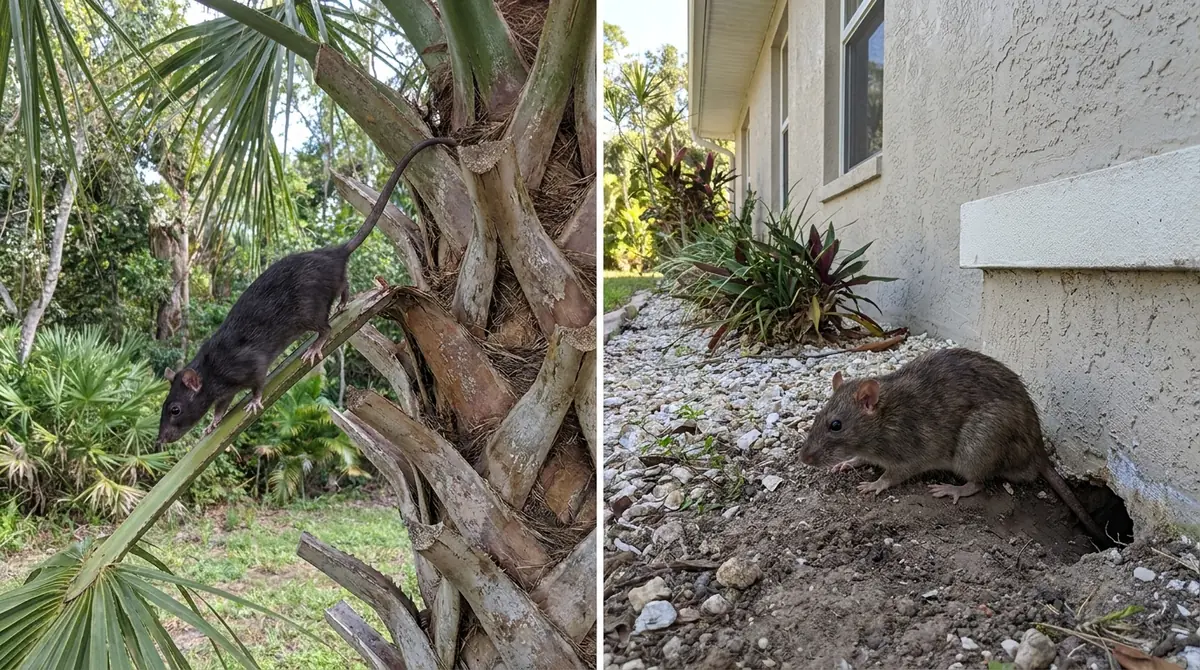
Roof rats are the main concern for a business here. They travel along branches and utility lines, enter through soffits and roof vents, and nest in ceiling voids above kitchens and stockrooms. Norway rats work at ground level, near back doors, delivery areas and dumpsters. Either way, the animals reach food and packaging fast, and the longer they stay, the more stock is spoiled.
Our work is built around the business, not the other way round. Visits are planned around your hours, traps and bait stations stay out of sight, and the premises are left tidy after every visit. See Rodent Inspection & Exclusion for how entry points are found and sealed, and Recurring Prevention & Maintenance for the scheduled checks that follow.

Every commercial job starts with a walk-through of the whole premises, so the plan matches the building, the stock and the hours. The work below is what a full commercial service includes.
Inspection covers the kitchen, dry store, stockroom, office areas, ceiling voids, back door and delivery area, and the outside of the building, so every entry point and nesting spot is found in one visit.
Trapping inside uses snap traps placed on the rats' routes in storage areas and ceiling voids, away from customers, staff and food preparation areas. Traps are checked, emptied and reset until the activity stops.
Bait stations go outside only, in tamper-resistant stations secured around the building, where children, customers and pets cannot reach them. No bait is placed inside the premises.
Staff often spot the signs before anyone sees a rat. If several of these appear in the same area, the animals are already inside.
Two or more signs in one area usually mean a nest nearby. Call and describe what staff have seen, and we will tell you what the inspection involves.
The pattern follows the building, not the trade. Old buildings hold more gaps, food businesses hold more to eat, and every business near palms and citrus faces roof rats from above.
Restaurant kitchens and dry stores on St. George Street face the highest risk. Food, warmth and old building gaps sit together, and roof rats in the ceiling void above a kitchen can reach storage fast.
Shops along St. George Street and San Marco Avenue hold stock in back rooms and basements, where droppings and gnawed packaging are often found first, behind the sales floor.
Offices on San Marco Avenue in Uptown hold rats in ceiling voids, storage rooms and shared corridors, where the animals travel between units through gaps in old walls.
Back doors and delivery areas are the ground-level entry point. A door left open during deliveries, or a worn door sweep, lets Norway rats in at night, and the animals head straight for the stockroom.
Historic buildings across the city, with pre-1978 construction and old wood, hold gaps around windows, doors and pipes that a new building would not have. Sealing those gaps needs care for the facade, and the work is done from inside wherever possible.
Short-term and vacation rentals in Historic Downtown and on Anastasia Island need fast, discreet work: a guest complaint follows a single sighting, so turnover checks between guests matter. Schools, hospitals and assisted living facilities need the same care, with work scheduled around classes, patients and residents, and traps and bait stations kept out of reach.
After a hurricane or heavy rain, low-lying businesses near the Matanzas River and the marsh edges see rats pushed in from flooded ground, so checks in the weeks after a storm matter. See Emergency Rodent Control if a rat is seen in a customer area right now.
A commercial job runs in order, so the business keeps trading while the rats are removed and the gaps are closed.
The whole premises are walked, entry points and nesting spots are found, and a plain-language plan is agreed, with visits timed around your hours.
Snap traps go on the rats' routes inside, out of sight. Gaps at doors, vents and rooflines are sealed with steel mesh and sheet metal.
Tamper-resistant bait stations are placed outside, secured and recorded, so rats outside the building are caught before they get in.
We return to check traps, stations and seals, and agree the rhythm of scheduled checks that keeps the premises covered.
Day ranges are typical for a light to moderate job; a large premises or a settled infestation can take longer, and the walk-through will tell you. Our own technicians do the work, and explain the plan in plain language before we begin.
A business cannot close for pest work, so the tools below are chosen to work around trading hours, keep customers away from the work, and leave the premises tidy.
What commercial rodent control changes in the three areas rats damage most often in a business: the kitchen, the office, and the stockroom.
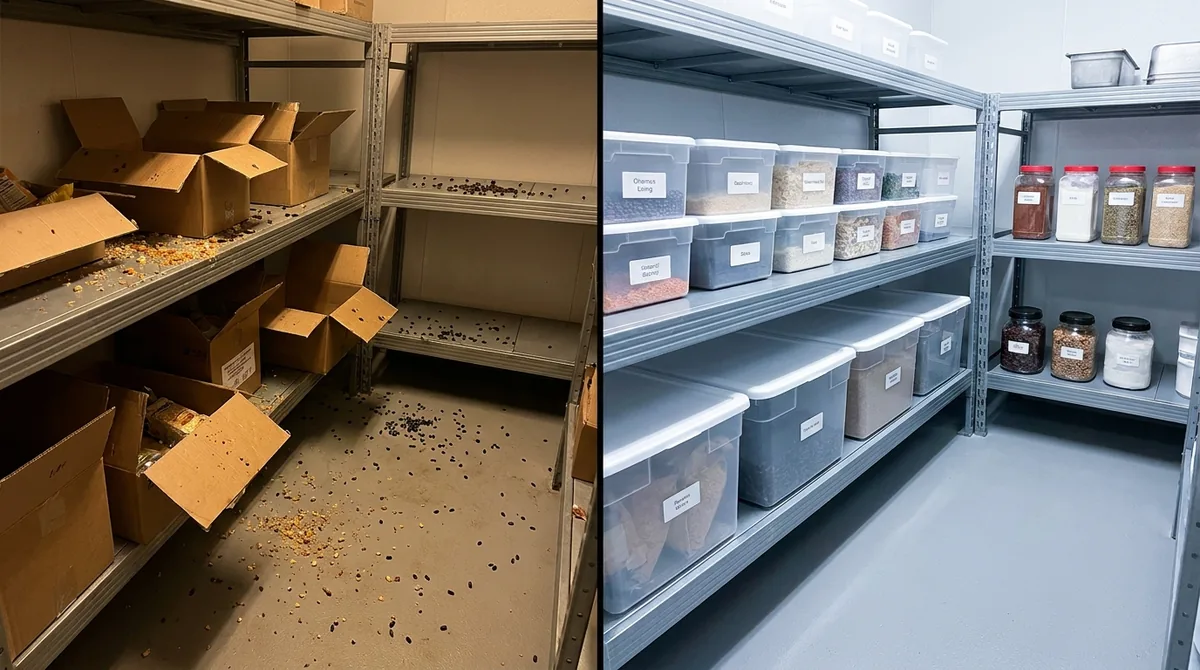 Before
After
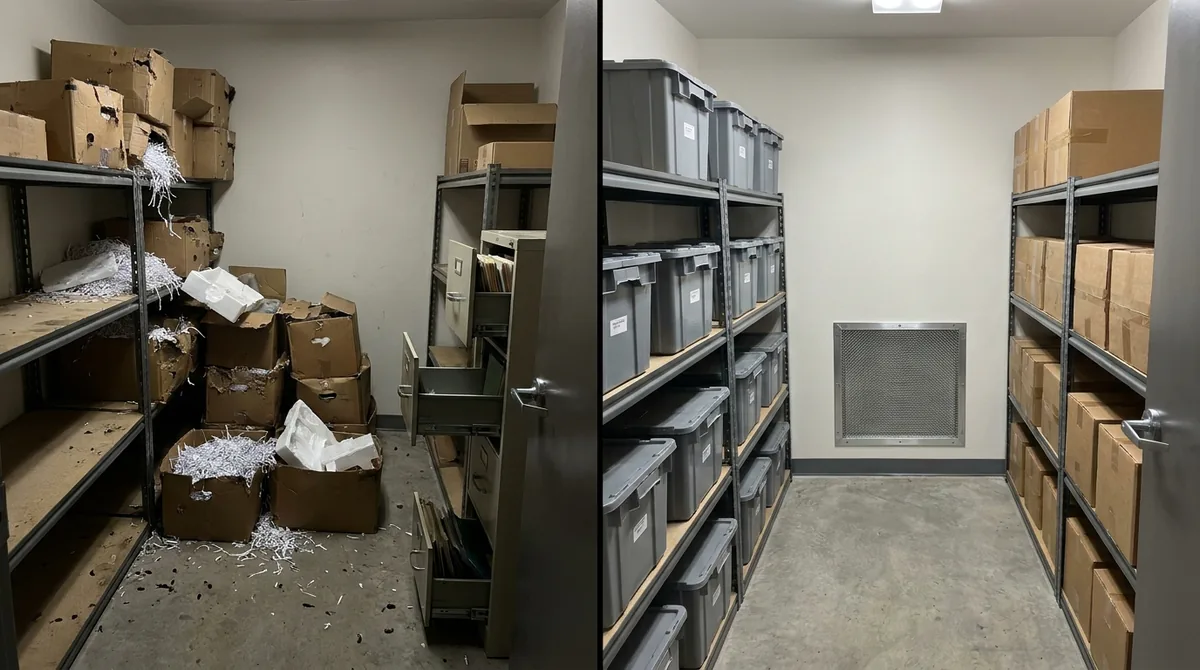 Before
After
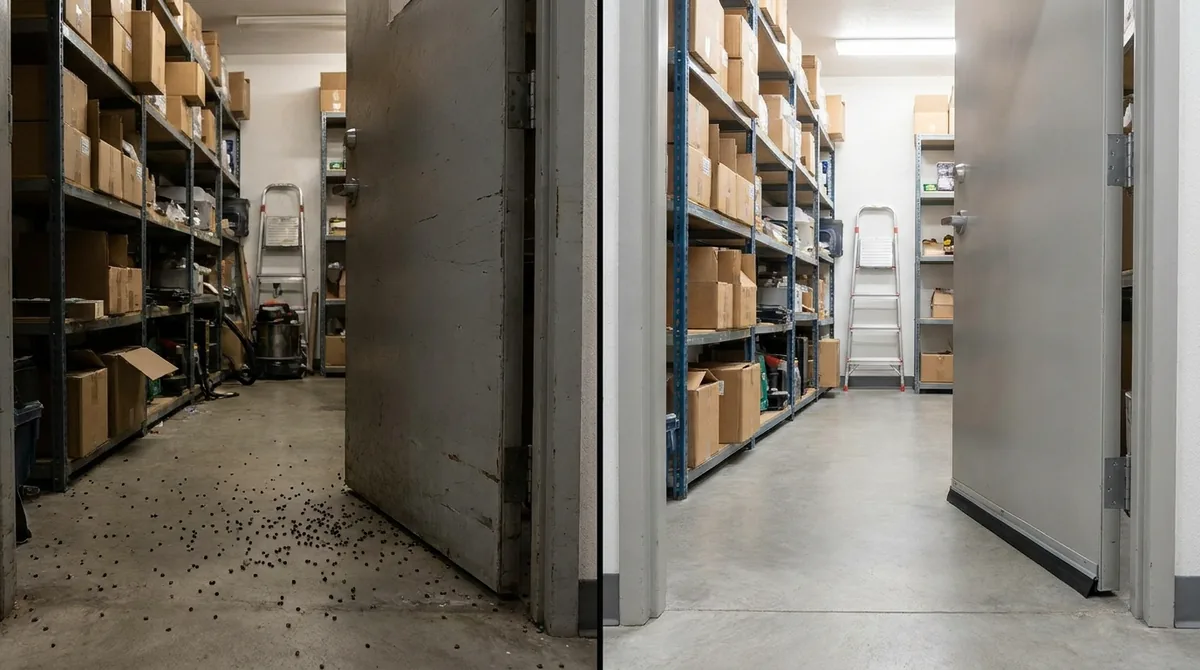 Before
After
These pairs show the kind of change commercial rodent control makes. They are illustrative images, not photos of one single job: every premises looks different. The full job is Rodent Inspection & Exclusion first, then trapping and scheduled checks.
A business needs rodent control that respects trading hours, keeps customers away from the work, and leaves a record behind. That is what our commercial service gives you.
Work is timed before opening, after closing, or in a quiet period, so the business keeps trading while the rats are dealt with.
Traps stay out of sight, bait stations stay outside, and the premises are left tidy after every visit.
Food areas, dry stores and stockrooms are checked first and sealed tight, so stock and packaging stay safe.
Written notes after each visit build into a record of what was found, sealed and checked, kept on file for your own team.
Work is done in a way that respects food hygiene routines: no bait inside, no mess in food areas, and storage kept clean and sealed.
Our own technicians handle inspection, trapping, sealing and checks, so the plan is carried through by the same team.
Trapping and sealing fix the rats you have now. These four habits keep new rats from moving into the premises after we leave.
If staff report a sighting, note the time and the place, and call. A quick check early keeps a small problem from reaching the customers.
Most commercial jobs can be planned around the week. These three cannot wait, because customers, food or stock are involved.
A rat in a sales floor, dining room or customer area needs action at once. Keep customers away from the area and call us.
Droppings in a kitchen, dry store or food preparation area mean the rats have reached food. Do not sweep dry droppings; call us and we will handle it safely.
Chewed food boxes and torn packaging in a stockroom mean stock is being spoiled. Call us, and keep the damaged stock separate until we have checked it.
If a rat is in a customer area right now, see Emergency Rodent Control. For the scheduled checks that follow a commercial job, see Recurring Prevention & Maintenance.
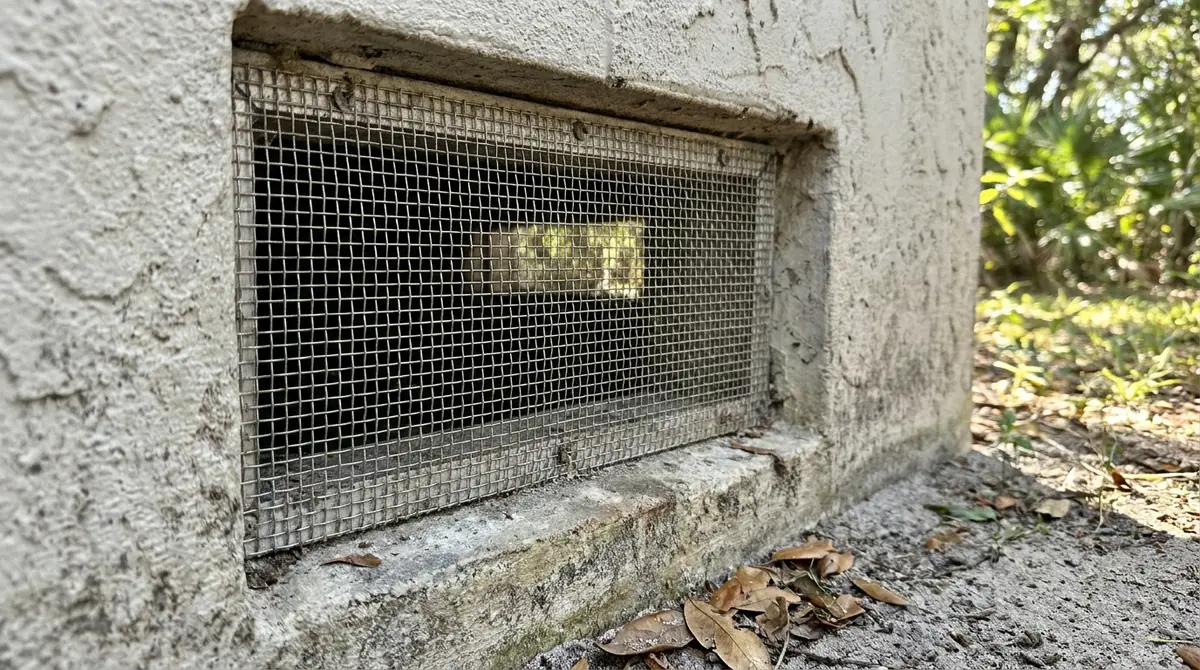
Every gap found, then sealed with steel mesh. Our technician walks the whole house, roofline, vents, foundation and pipes, photographs each opening, and seals it so rats and mice stay outside for good.
View Details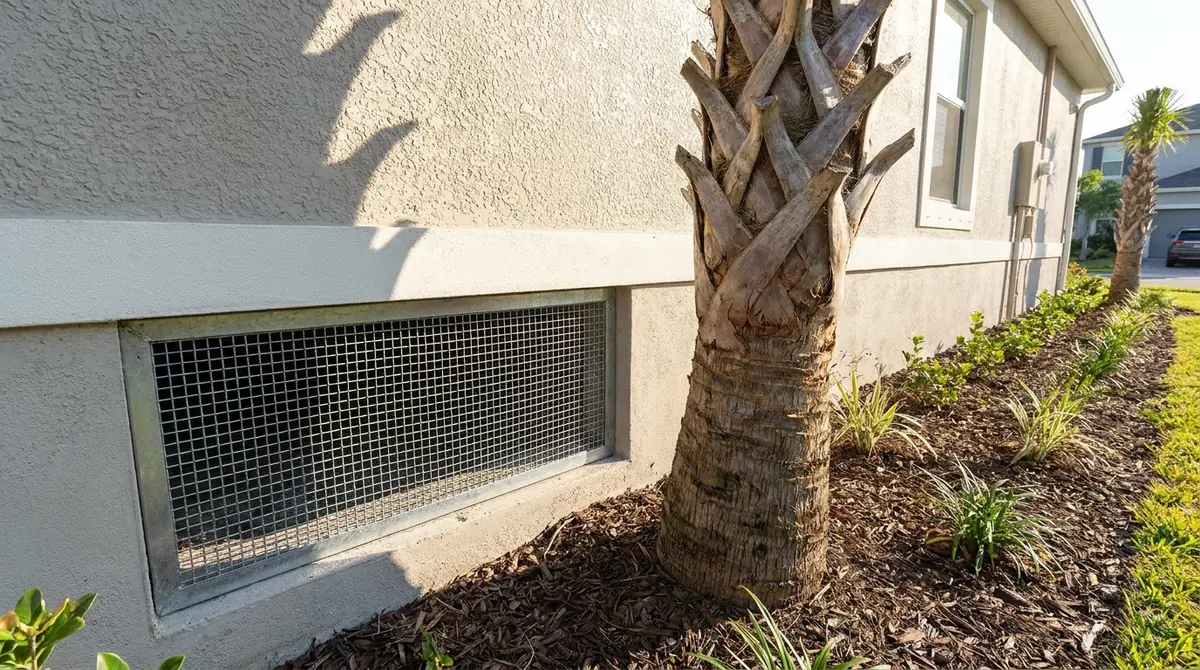
Seasonal checks that catch new gaps early. We visit through the year, re-check every seal, trim back the branches and palms that give rats a route, and stop a small gap becoming an infestation.
View Details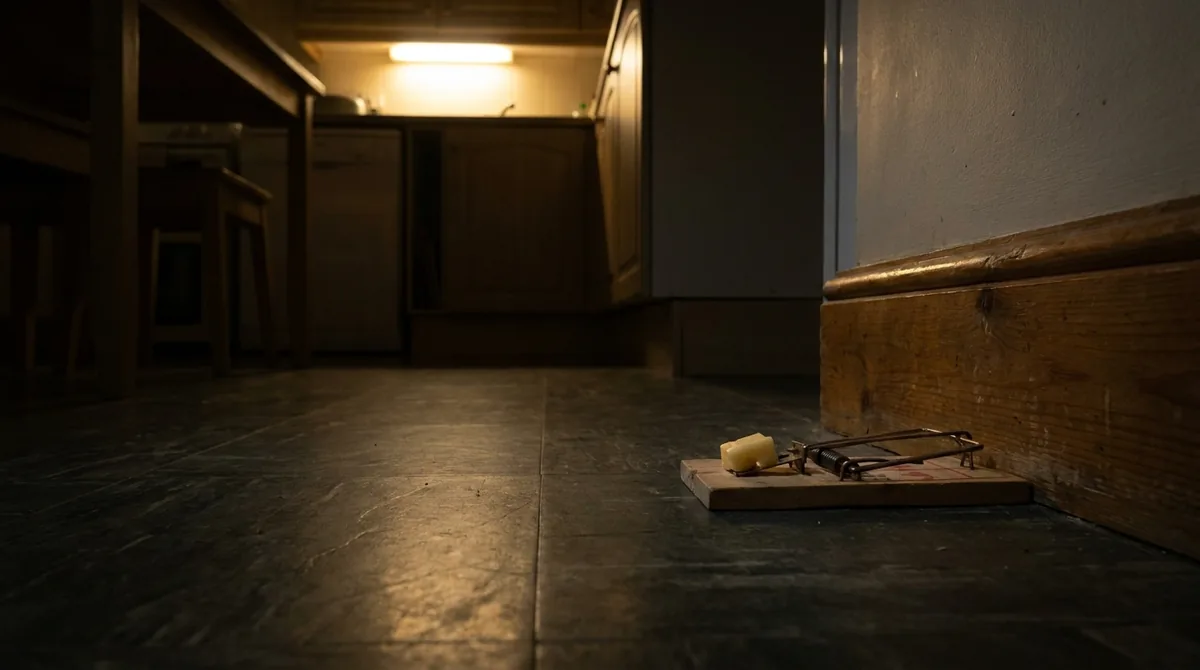
A rat or mouse in your living space right now. Call us and we will arrange a fast inspection. We trap the animal, check for more, and seal the entry point so it does not happen again.
View DetailsPractical guides from our St. Augustine team: how to spot roof rats, tell them apart, and keep them out for good.
November 2026
Slender climber or stocky burrower? Size, droppings, sounds and nesting spots give them away.
Read the Guide →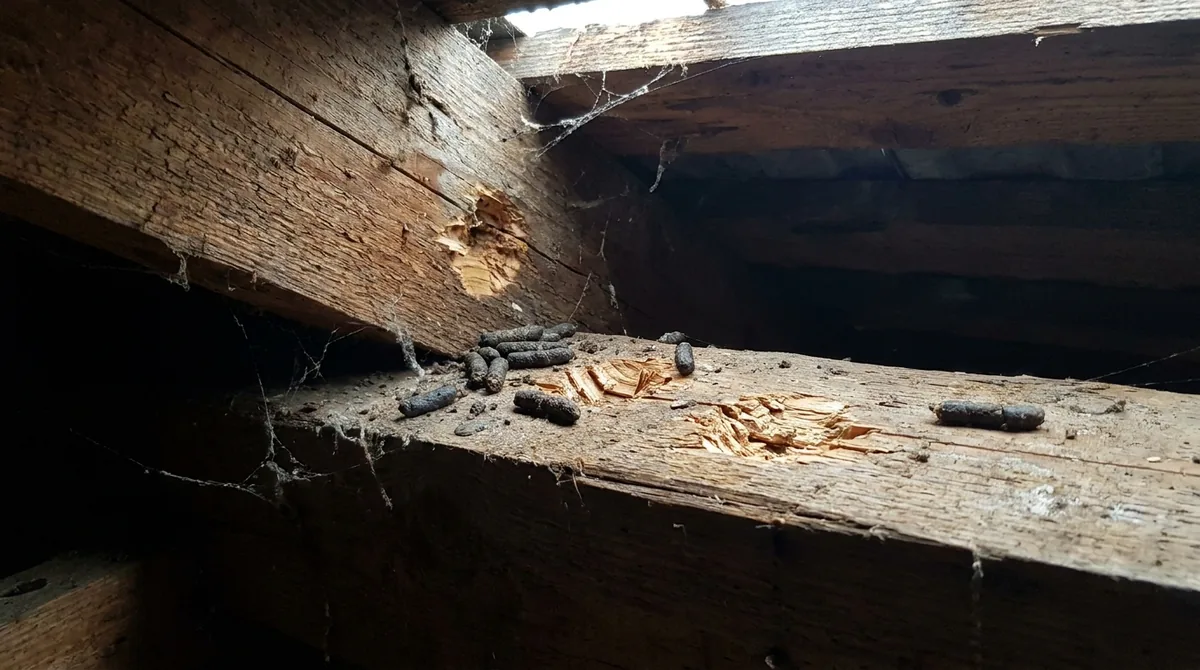
November 2026
Hollowed citrus, palm frond skirts, attic scratching and greasy rub marks: the signs that usually mean a nest.
Read the Guide →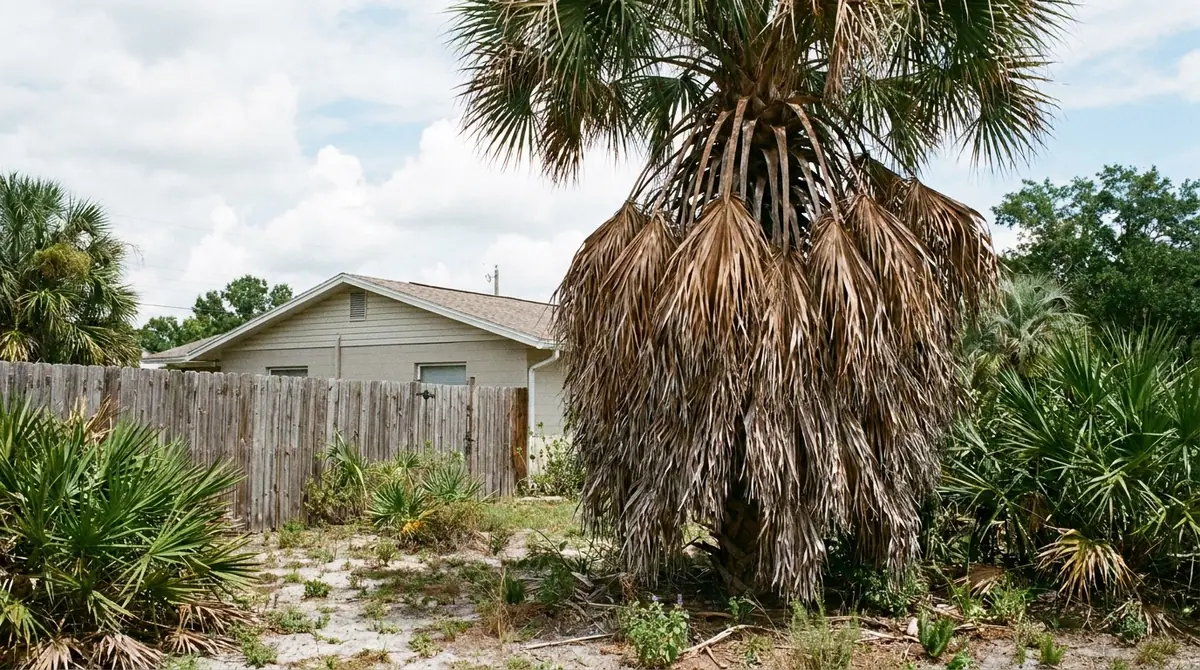
November 2026
A palm rat is a roof rat that nests in palm fronds. Why palms attract them, and how to cut the risk.
Read the Guide →Yes. Visits are planned around your business hours, so trapping, sealing and checks happen before opening, after closing, or during a quiet period, whichever suits the business. Tell us your hours when you call, and the plan is built around them.
No. Traps go inside, out of sight, in storage areas, ceiling voids and service corridors, away from customers. Bait stations go outside, secured and placed where customers and staff do not walk. The work is discreet, and the premises stay tidy.
Yes, because the risks are different. A restaurant kitchen and dry store need food areas protected and storage checked closely, while an office needs storage rooms, ceiling voids and shared corridors covered. The inspection finds the pattern for your premises, and the plan follows it.
After each visit you get a written note of what was found, what was sealed, where traps and bait stations are placed, and what was checked. The notes build into a record you can keep on file for your own team and for any inspection of the premises.
It depends on the premises and the food stored there. A restaurant with a busy kitchen is usually checked more often than a small office, and a shop near palms and citrus needs watching through the fall peak. The inspection sets the rhythm, and the plan is agreed with you first.
Keep calm, keep customers away from the area, and call us with the time and the place it was seen. Do not move traps or bait stations, and do not try to catch the animal. Note the spot, and we will come and check it.
We provide commercial rodent control across St. Augustine, including Historic Downtown, Lincolnville, Uptown, North City, Davis Shores, Anastasia Island, West St. Augustine and Fullerwood. See all rodent control service areas in St. Augustine.
“Our restaurant had mice in the storage room. They worked around our hours, sealed the gaps, and set up a plan that keeps us clear for inspections.”
Omar S.Historic Downtown
“We manage an office building and needed a discreet service. They came after hours, handled the problem, and gave us a written report for our records.”
Karen D.Uptown
“Rats were getting into our shop’s back room. They sealed the entry points and set traps. We have passed every health inspection since.”
Maria G.North City
Call us and tell us where you are in St. Augustine. Our office is on Allgood Circle in St. Augustine, and our technicians serve homes across the city, from Lincolnville to Davis Shores and from Uptown to West St. Augustine.
Our office: 190 Allgood Cir #109, St. Augustine, FL 32086 · Get Directions
Tell us what you have seen or heard, and our team will come to your St. Augustine home.
(904) 533-7109