
One Team for Every Unit
Our own technicians cover every unit and the common areas, so the plan is carried through by the same team, not handed between firms.

Rats in a managed community move through shared walls, ceiling voids and common areas, from one unit to the next. Our own technicians cover every unit and the common areas, coordinate visits with tenants, and seal units between tenancies.
A property manager or HOA faces a different rodent problem from a single homeowner. The rats are not in one house: they are in one unit, then the next, moving through shared walls, ceiling voids and crawl spaces. A tenant reports scratching, the unit beside it reports droppings, and the shared laundry room shows gnaw marks. Treating one unit while the route stays open means the problem returns with the next tenant.
Roof rats are the main concern in this city. They travel along oak branches and palm fronds to the roofline, enter through soffits and vents, and nest in the ceiling voids above townhomes and condos. Norway rats work at ground level, in pier-and-beam crawl spaces under older rental homes and in shared bin areas. Both species use the gaps that old construction leaves behind, and a managed community has many of them.
Our work is built for a portfolio, not a single visit. One team covers every unit and the common areas, visits are coordinated with tenants, turnover sealing happens between tenancies, and every visit ends with a photo report for the lease file. See Commercial Rodent Control for the same approach in shops and offices, and Recurring Prevention & Maintenance for the seasonal checks that follow.

Every managed property starts with a walk-through of the units and the common areas, so the plan covers the whole community, not just the unit that reported the problem.
Rental homes across the city are inspected unit by unit, with the attic, crawl space, kitchen and roofline checked in each, and the gaps found are sealed with steel mesh and sheet metal.
Townhome rows and condo blocks are treated as one building with shared walls. Traps are placed on the routes rats use between units, so one unit cannot pass the problem to the next.
Common areas are covered in the same job: shared laundry rooms, storage areas, corridors, crawl spaces and outside bin areas, where rats travel between units unseen.
Tenants report the signs first, and the pattern across units tells the story. If several of these appear across a community, the rats are moving through shared spaces.
If tenants in more than one unit report signs, call and tell us which units are affected. The pattern across units shows where the route runs, and the inspection follows it.
The pattern follows the building type. Townhome rows share walls, condos share corridors and ceiling voids, and older rental homes sit on piers with crawl spaces below. Each type needs a different route checked.
Rental homes in Lincolnville and West St. Augustine, many of them older frame homes on piers, hold Norway rats in the crawl space below and roof rats in the attic above. The low space is damp and hard to reach, so the mess builds up unseen.
Townhome rows in Davis Shores and Fullerwood share walls and roofline gaps, so a rat that enters one unit can travel the whole row through the ceiling void. Sealing one unit without the row leaves the route open.
Condo blocks in Historic Downtown and on Anastasia Island hold rats in shared corridors, storage rooms and ceiling voids, with old construction giving many small gaps around pipes and vents.
Common laundry and storage rooms are the meeting point. Rats travel through them at night, and droppings there often appear before any tenant reports a sighting in a unit.
Shared bin areas and outside storage draw Norway rats at ground level, especially near palms and citrus, and the animals move from the bins into the nearest unit through a gap at the door.
Short-term and vacation rentals in a managed community need turnover sealing between guests, so a new guest does not move into a unit with a gap the last guest never reported. A rat sighting in a rental unit becomes a guest complaint the whole community hears about, so the turnover check matters as much as the trap.
After a hurricane or heavy rain, low-lying communities near the Matanzas River and the marsh edges see rats pushed up into attics and crawl spaces, so checks in the weeks after a storm matter. See Rodent Inspection & Exclusion for how entry points are found and sealed across a whole community.
A managed job runs in order, so tenants are disturbed as little as possible and the whole community is covered, not just one unit.
The units that reported signs are walked first, then the common areas and the units beside them, so the route the rats use is found.
Snap traps go on the rats' routes inside units and common areas, out of sight and away from tenants. Traps are checked, emptied and reset until the activity stops.
Gaps at doors, vents, pipes and rooflines are sealed with steel mesh and sheet metal. Empty units at turnover are sealed end to end, so the next tenant moves into a closed unit.
We return to check traps, stations and seals, and the photo report is handed over, showing what was found, sealed and checked across the property.
Day ranges are typical for a light to moderate job; a large community or a settled infestation can take longer, and the walk-through will tell you. Our own technicians do the work, and the plan is agreed with the manager before we begin.
A managed property needs work that fits around tenants, keeps a record, and covers shared spaces as well as units. The tools below are how our technicians do it.
What property management and HOA rodent control changes in the three places rats damage most often in a community: the building, the common areas, and a single unit.
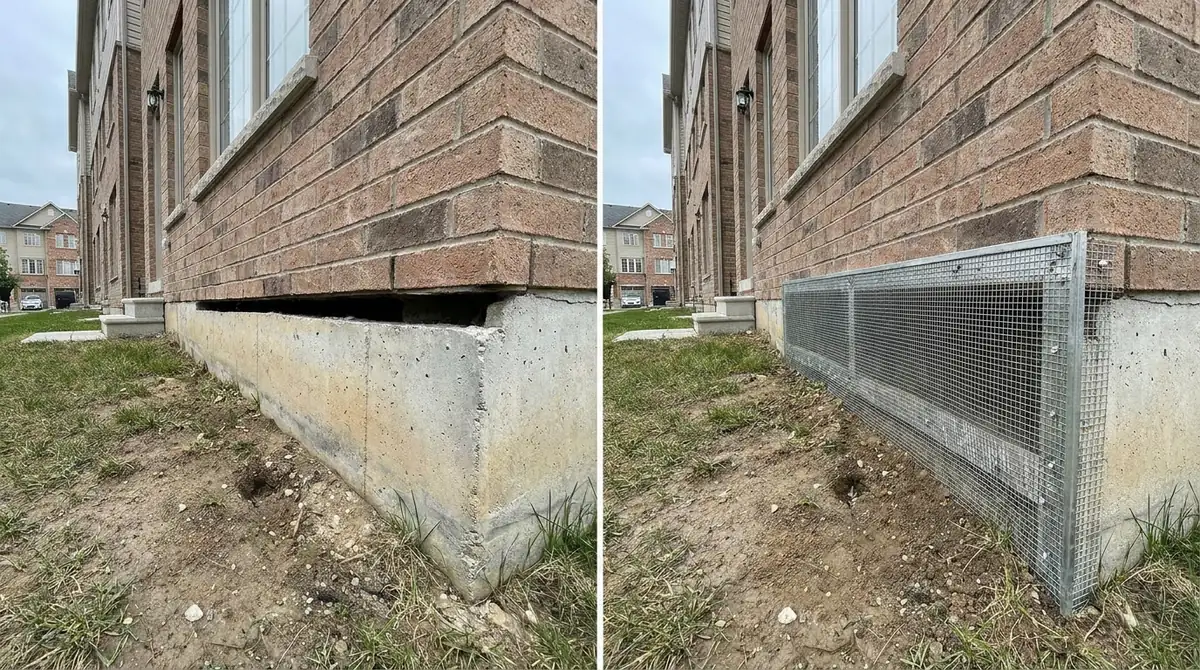 Before
After
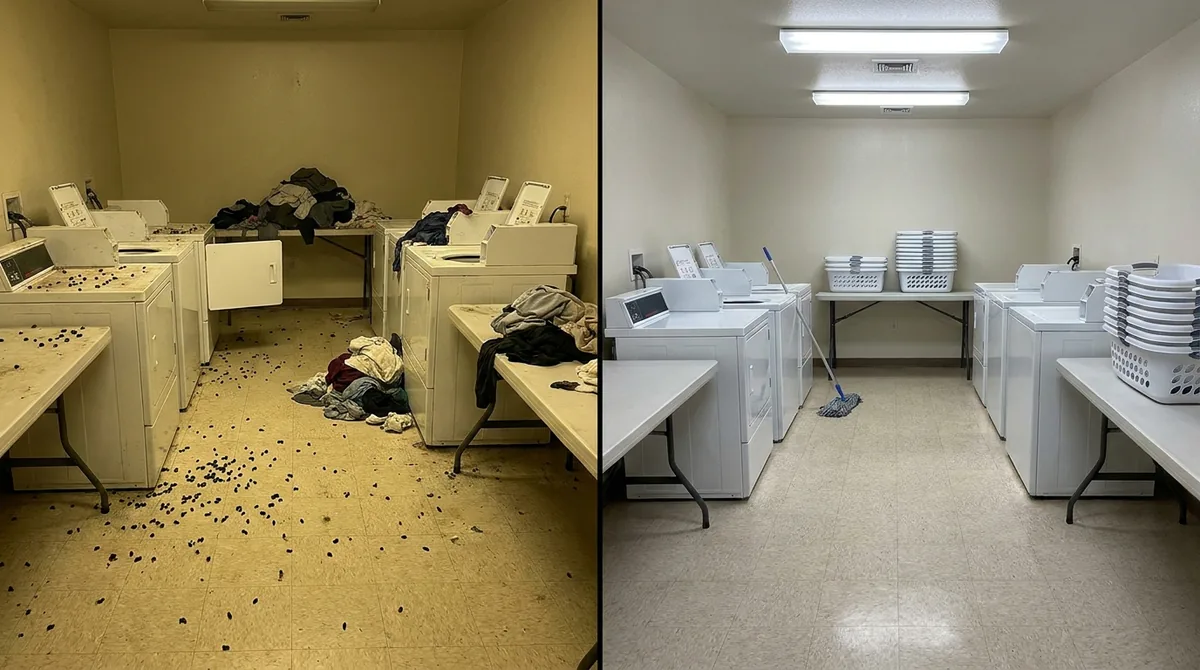 Before
After
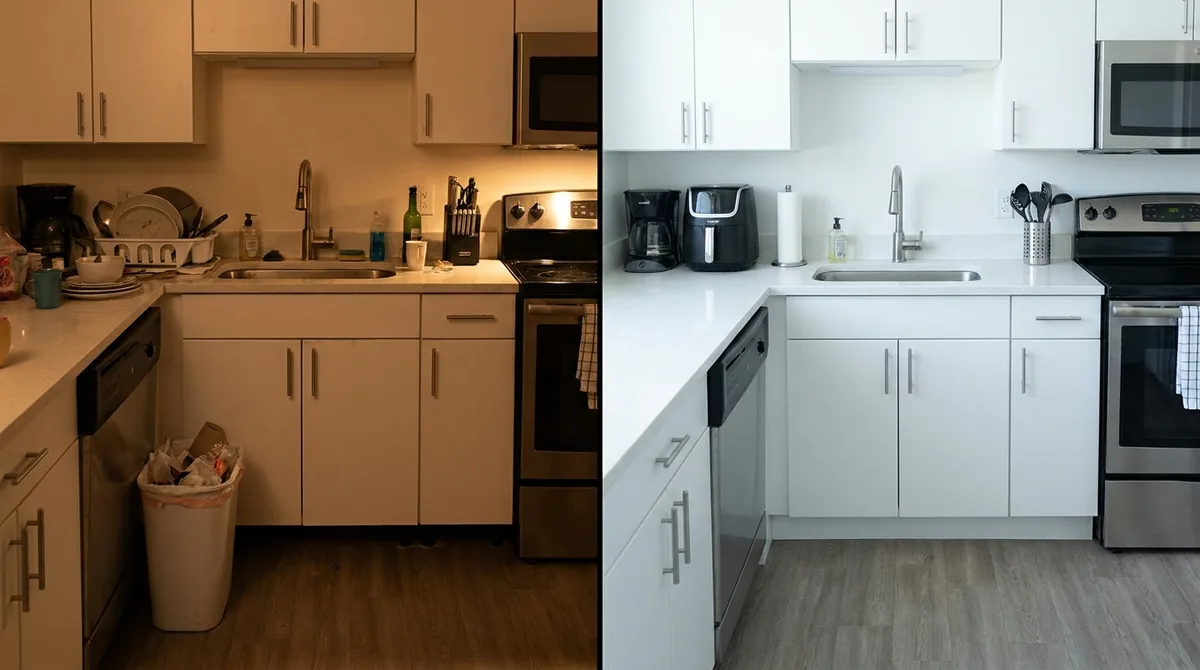 Before
After
These pairs show the kind of change property management and HOA rodent control makes. They are illustrative images, not photos of one single job: every community looks different. The full job is Rodent Inspection & Exclusion first, then trapping and turnover sealing.
A portfolio needs one team, one plan, and a record after every visit. That is what our property management and HOA service gives you.
Our own technicians cover every unit and the common areas, so the plan is carried through by the same team, not handed between firms.
Visit times are agreed with the manager first, and kept to, so tenants know what will happen and when, and units are left tidy.
Empty units at turnover are inspected end to end and sealed, so the next tenant moves into a unit that is already closed to rats.
Entry points, traps, stations and seals are photographed after each visit, so the lease file shows the work done.
Shared laundry rooms, storage, corridors and bin areas are checked in the same job, so the route between units is closed.
The plan covers the row, the block or the portfolio as one building, so one unit cannot pass the problem to the next.
Trapping and sealing fix the rats you have now. These four habits keep new rats from moving into the community after we leave.
If a tenant reports a sighting, note the unit number, the time and the place, and call. A quick check early keeps a small problem in one unit from spreading down the row.
Most managed jobs can be planned around the week. These three cannot wait, because tenants, shared areas or a turnover are involved.
A rat in a kitchen, bedroom or living room needs action at once. Keep the tenant informed, keep children and pets out of the room, and call us.
Droppings or gnaw marks found when a tenant moves out mean the unit needs trapping and sealing before the next tenant moves in. Call before the new tenancy starts.
Droppings or sightings in a laundry room, storage area or corridor mean rats are moving between units. Call us, and we will check the whole row, not just one unit.
If a rat is in a living space right now, see Emergency Rodent Control. For the seasonal checks that follow a managed job, see Recurring Prevention & Maintenance.

Offices, restaurants and shops, around your schedule. We work outside your opening hours, keep the visit discreet, and give you a written report your health inspector will accept.
View Details
Seasonal checks that catch new gaps early. We visit through the year, re-check every seal, trim back the branches and palms that give rats a route, and stop a small gap becoming an infestation.
View Details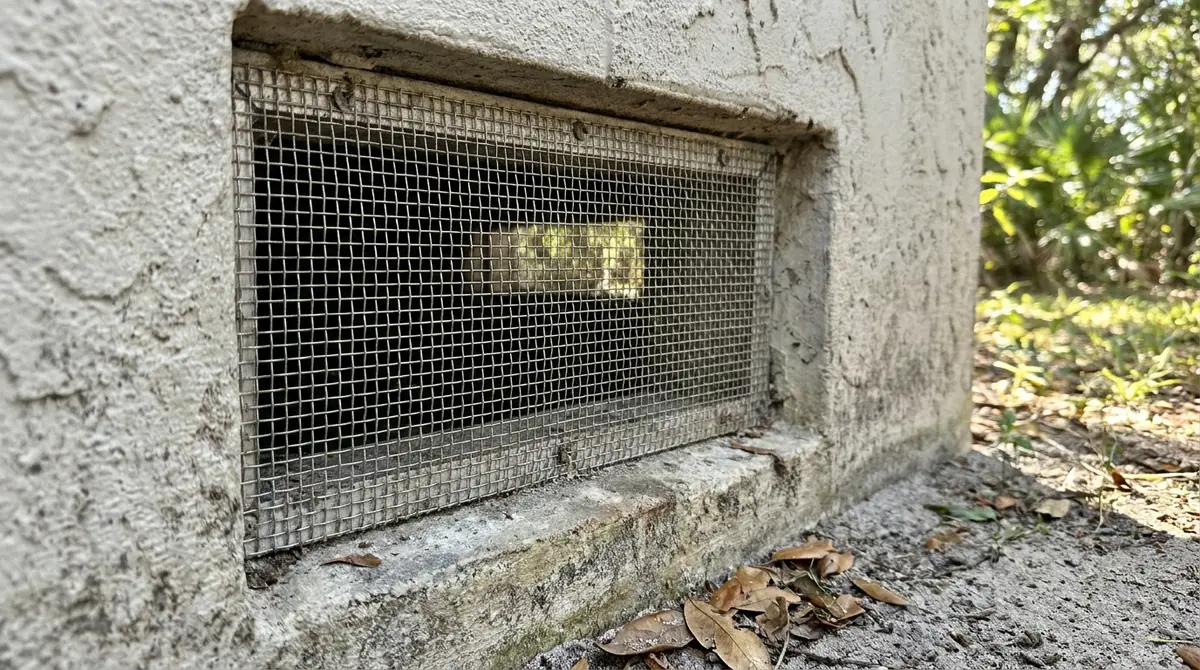
Every gap found, then sealed with steel mesh. Our technician walks the whole house, roofline, vents, foundation and pipes, photographs each opening, and seals it so rats and mice stay outside for good.
View DetailsPractical guides from our St. Augustine team: how to spot roof rats, tell them apart, and keep them out for good.
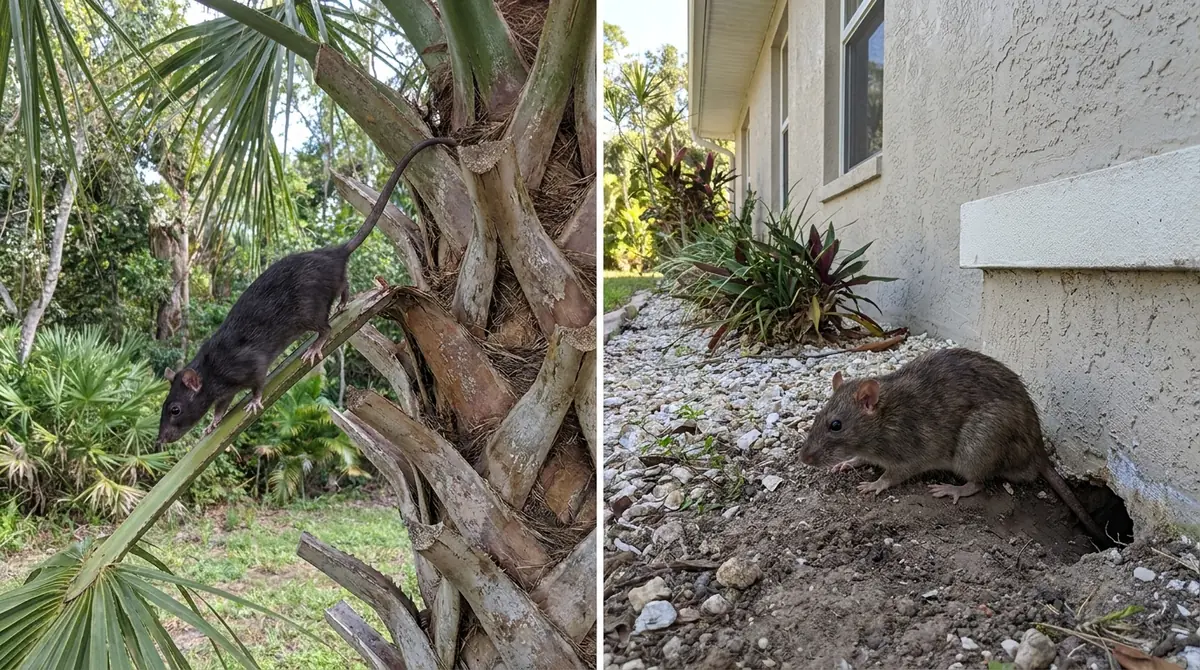
November 2026
Slender climber or stocky burrower? Size, droppings, sounds and nesting spots give them away.
Read the Guide →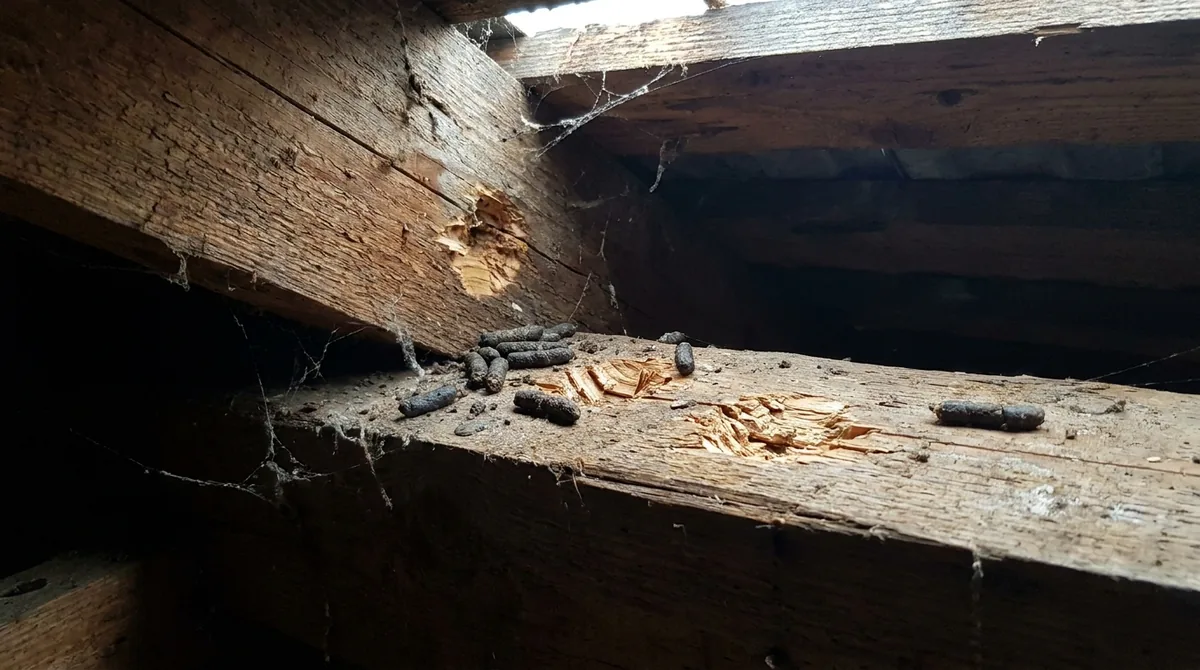
November 2026
Hollowed citrus, palm frond skirts, attic scratching and greasy rub marks: the signs that usually mean a nest.
Read the Guide →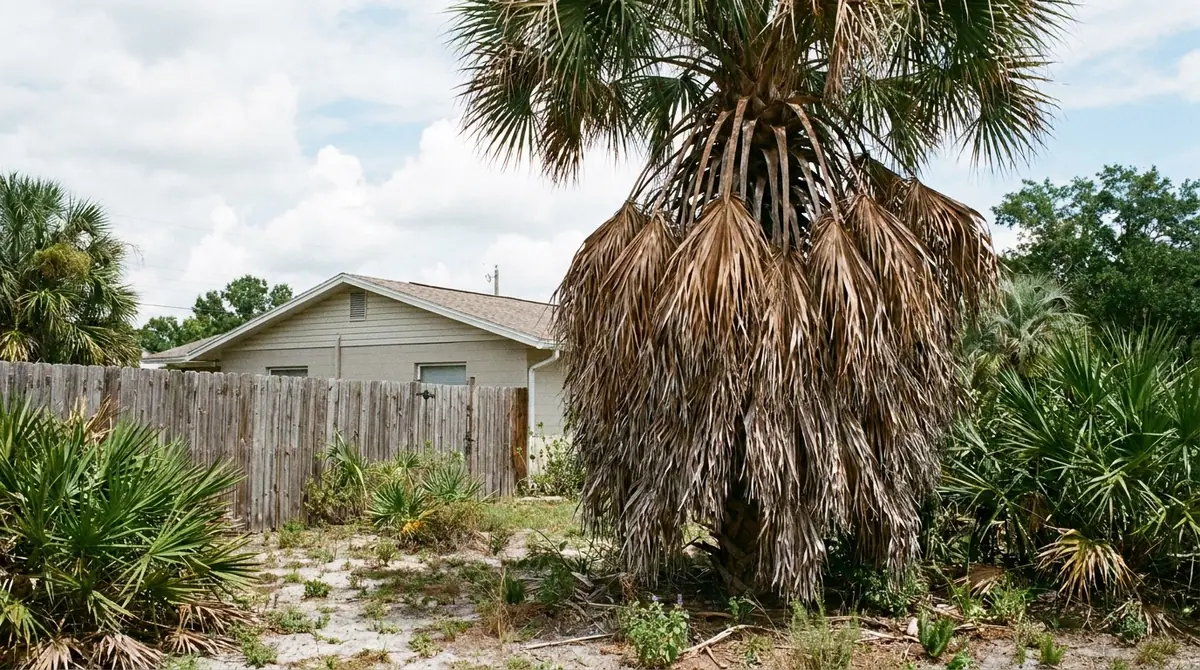
November 2026
A palm rat is a roof rat that nests in palm fronds. Why palms attract them, and how to cut the risk.
Read the Guide →We agree the visit times with you first, then work around the tenants. You tell us the access arrangements for each unit, and we keep to them, arriving when agreed and leaving the unit tidy. Tenants are told what will happen and how long it takes, so the visit is no surprise.
The report shows the entry points found, the traps and bait stations placed, and the seals fitted, with photos of each. It also notes what was checked in common areas and in each unit, so the file shows the work done across the property.
Yes, and turnover is the best time for it. An empty unit is easy to inspect from end to end, gaps are found and sealed without disturbing anyone, and the next tenant moves into a unit that is already closed to rats.
Yes. Shared laundry rooms, storage areas, corridors, crawl spaces and outside bin areas are all checked, because rats move between units through common areas. Treating units without the common areas leaves the route open.
A townhome row is treated as one building with shared walls. Each unit is inspected, the common gaps are sealed, and traps are placed on the routes rats use between units, so one unit cannot pass the problem to the next.
Call us with the unit number and what the tenant saw or heard. We come and inspect the unit and the units beside it, because rats in one unit often come through a shared wall or ceiling void. The visit, the findings and the seals are added to the photo report.
We provide property management & hoa solutions across St. Augustine, including Historic Downtown, Lincolnville, Uptown, North City, Davis Shores, Anastasia Island, West St. Augustine and Fullerwood. See all rodent control service areas in St. Augustine.
“We manage 40 units and had mice in three of them. They handled all three, sealed the common areas, and gave us one clear report. Very organised.”
Steve B.Davis Shores
“Our HOA had rats in the shared garage. They inspected the whole building, sealed the gaps, and set up a maintenance plan. No complaints since.”
Linda R.Anastasia Island
“They work well with our residents, give notice before visits, and keep the common areas clear. The board is happy with the service.”
Paul M.Fullerwood
Call us and tell us where you are in St. Augustine. Our office is on Allgood Circle in St. Augustine, and our technicians serve homes across the city, from Lincolnville to Davis Shores and from Uptown to West St. Augustine.
Our office: 190 Allgood Cir #109, St. Augustine, FL 32086 · Get Directions
Tell us what you have seen or heard, and our team will come to your St. Augustine home.
(904) 533-7109